
Marineland Maxi-Jet 600 Review: Versatile Water Pump & Power Head
Aquarium enthusiasts know that water circulation is the lifeblood of a thriving tank. Without proper flow, debris accumulates, oxygen levels drop, and fish health suffers. The Marineland Maxi-Jet 600 has become a trusted solution for hobbyists seeking a reliable, versatile water pump and power head. Its reputation stems from durability, adaptability, and consistent performance, making it a staple in both freshwater and saltwater setups.
Why the Marineland Maxi-Jet 600 Stands Out
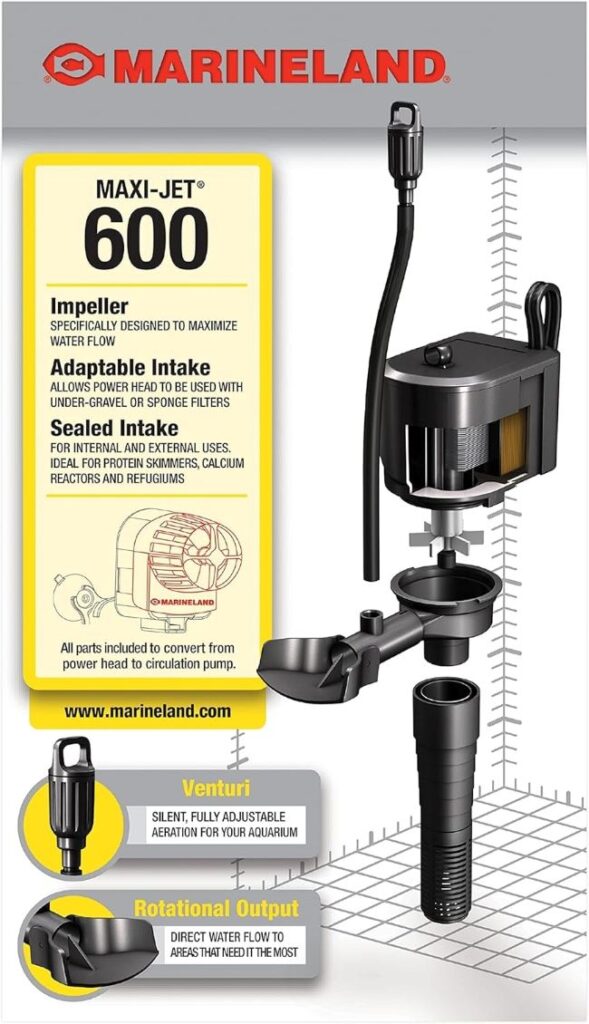
Many pumps promise efficiency, but few deliver consistent results across multiple applications. The Maxi-Jet 600 is not just a pump; it’s a multi-functional powerhouse. With a flow rate of 160 gallons per hour, it balances strength with precision, ensuring tanks remain clean and oxygenated. Unlike cheaper alternatives, it maintains steady output without overheating or producing excessive noise. Hobbyists appreciate its ability to function as a circulation pump, utility pump, or even a wave maker when paired with accessories.
Product at a Glance
- Brand: Marineland
- Model: Maxi-Jet 600
- Flow Rate: 160 GPH
- Applications: Power head, utility pump, circulation pump
- Tank Size Suitability: 20–50 gallons
- Durability: Reinforced impeller and sturdy casing
- Noise Level: Low vibration, quiet operation
Key Features
| Feature | Details |
|---|---|
| Flow Rate | 160 gallons per hour |
| Versatility | Functions as power head, utility pump, circulation pump |
| Energy Efficiency | Consumes minimal power compared to similar models |
| Durability | Reinforced impeller, long-lasting motor |
| Noise Control | Quiet operation with reduced vibration |
| Tank Compatibility | Ideal for 20–50 gallon aquariums |
Pros and Cons
| Pros | Cons |
|---|---|
| Reliable and consistent water flow | Not ideal for tanks above 50 gallons |
| Multi-functional design | Requires occasional cleaning to prevent buildup |
| Energy-efficient motor | Flow may be too strong for delicate fish |
| Quiet operation | Accessories sold separately |
| Durable construction | Slightly higher price than budget pumps |
Performance and Versatility
The Marineland Maxi-Jet 600 excels in versatility. It can serve as a power head to drive undergravel filters, a circulation pump to mimic natural currents, or a utility pump for water changes. This adaptability makes it a cost-effective choice for aquarists who want one device to handle multiple tasks. Its 160 GPH flow rate ensures strong circulation without overwhelming smaller tanks. For reef tanks, the pump helps prevent dead spots where detritus accumulates, improving coral health.
Common Cleaning Tips
Proper maintenance extends the life of any pump. Cleaning the Maxi-Jet 600 is straightforward:
- Unplug before cleaning to ensure safety.
- Disassemble the impeller housing and rinse with warm water.
- Use a soft brush to remove algae or calcium deposits.
- Avoid harsh chemicals that may damage the motor.
- Reassemble carefully to maintain proper alignment.
Regular cleaning every 4–6 weeks prevents clogging and ensures consistent performance.
Maintenance and Troubleshooting Tips
Even reliable pumps encounter issues. Common troubleshooting steps include:
- Reduced Flow: Check for debris in the impeller.
- Noise Increase: Ensure the pump sits securely to reduce vibration.
- Pump Not Starting: Inspect the impeller for damage or misalignment.
- Overheating: Clean vents and ensure proper water circulation.
Most problems stem from neglecting routine cleaning. With consistent care, the Maxi-Jet 600 can last several years without major repairs.

What Real People Say — Voices from the Community
Aquarists often praise the Maxi-Jet 600 for its reliability. Many highlight its quiet operation, noting that it doesn’t disturb household environments. Reef keepers appreciate its ability to maintain strong currents, which benefit coral growth. Some users mention that while the flow is powerful, it can be adjusted with accessories to suit delicate species. Others emphasize its longevity, with reports of pumps lasting over five years with minimal issues.
Relevant FAQs
Q: Can the Maxi-Jet 600 be used in saltwater tanks?
Yes, it performs well in both freshwater and saltwater environments.
Q: Is it suitable for larger tanks?
It works best in tanks between 20–50 gallons. Larger tanks may require multiple units.
Q: How often should I clean the pump?
Every 4–6 weeks is recommended for optimal performance.
Q: Does it come with accessories?
Basic setup is included, but additional accessories like wave makers are sold separately.
Q: Is it energy-efficient?
Yes, it consumes less power compared to many competing pumps.
Expert Insights and Comparisons
Compared to similar pumps like the Hydor Koralia Nano or AquaClear Powerhead, the Maxi-Jet 600 offers superior versatility. While the Koralia excels in wave-making, it lacks utility functions. AquaClear provides strong filtration support but doesn’t match the adaptability of the Maxi-Jet. Therefore, the Maxi-Jet 600 remains a balanced choice for hobbyists who value multi-functionality.
Industry reviews often highlight its durability. The Maxi-Jet 600 fits this category, making it a smart investment for long-term aquarists.
Final Thought
The Marineland Maxi-Jet 600 Review: Versatile Water Pump & Power Head reveals a product that delivers on its promises. Its adaptability, durability, and efficiency make it a standout choice for aquarists seeking reliable water circulation. While not perfect for very large tanks, it shines in medium setups where versatility matters most. With proper care, it can serve as a dependable workhorse for years.
Call to Action: If you want a pump that balances power, versatility, and longevity, the Marineland Maxi-Jet 600 deserves a place in your aquarium. Explore trusted retailers today and experience the difference in water clarity, fish health, and overall tank vitality.
Related Topics: Sumpless Saltwater Aquariums: Benefits & Drawbacks