How to Choose Aquaneat Full Spectrum Aquarium Light
Choose an Aquaneat Full Spectrum Aquarium Light by matching tank length, plant demands, brightness, controls, and mounting height. For most beginner freshwater setups, prioritize adjustable intensity and reliable timing over maximum brightness.
Aquarium plants use photosynthetically active light across roughly 400 to 700 nanometers. A practical starting point also limits the daily photoperiod to about 6 to 8 hours while plants adapt.
If you are comparing models, the Aquaneat Full Spectrum Aquarium Light deserves attention for its accessible controls and freshwater-focused design. However, the best choice depends more on your aquarium than the product label.
Key Takeaways
- Measure your aquarium before choosing an Aquaneat light size.
- Match light intensity to your plants instead of choosing maximum brightness.
- Prioritize dimming and timing when managing algae or new plants.
- Consider tank depth because light loses usable intensity underwater.
- Use full-spectrum lighting for natural appearance and planted-tank growth.
- Increase light gradually when plants need more energy.

Start With Your Aquarium, Not The Light
The most common mistake involves buying a light first and planning the aquarium afterward. Instead, identify your tank dimensions, water depth, plants, livestock, and maintenance routine.
Tank length determines physical coverage, while depth influences how much useful light reaches the substrate. Therefore, two aquariums with identical gallon capacities can require different lighting strategies.
Measure Tank Length And Depth
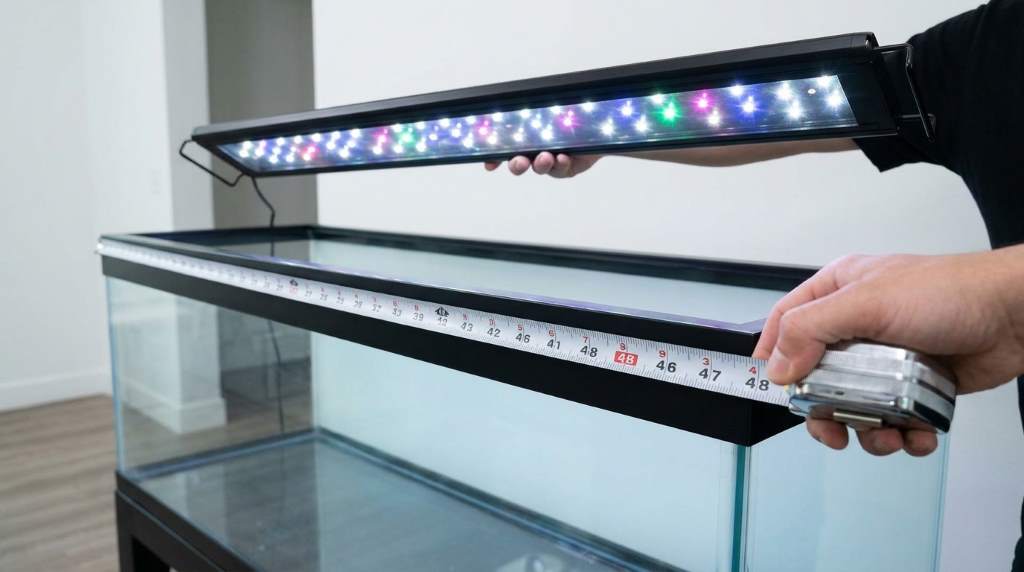
Measure the inside length of the aquarium before selecting an adjustable fixture. Then measure the distance between the light and the lowest plants you want to grow.
A shallow aquarium generally needs less intensity than a deep aquarium with demanding plants. Likewise, floating plants can reduce the light reaching plants underneath them.
Identify Your Plant Category
Easy plants such as Anubias, Java fern, and many mosses tolerate modest lighting. Meanwhile, carpeting plants and demanding red stems usually require substantially more usable light.
Make a plant list before choosing your brightness level. This simple step prevents you from buying an unnecessarily powerful fixture for a low-light aquarium.
Understand What Full Spectrum Actually Means
Full spectrum describes light output across multiple visible wavelengths rather than a single narrow color. However, the phrase alone does not tell you how much usable light reaches your plants.
Therefore, treat full spectrum as a useful feature rather than proof of superior plant performance. Intensity, distribution, spectrum quality, and photoperiod must work together.
Why Spectrum Matters
Plants absorb different wavelengths during photosynthesis, while your eyes perceive those wavelengths differently. A balanced spectrum can also make fish colors and plant foliage appear more natural.
Red and blue wavelengths receive considerable attention in planted aquariums. Still, you should not choose a fixture solely because its marketing highlights those colors.
PAR Matters More Than Wattage
PAR measures photosynthetically active radiation reaching a specific location. Wattage only describes electrical consumption, so it cannot reliably predict plant-usable light.
For that reason, avoid choosing an Aquaneat fixture simply because another model consumes more watts. A well-positioned lower-wattage fixture can outperform a stronger light with poor coverage.
Choose Brightness Based On Plant Demand
Think about lighting in tiers rather than chasing the brightest setting. Low-demand plants generally need less intensity than dense carpets or demanding red species.
| Plant Setup | Lighting Approach | Typical Strategy |
|---|---|---|
| Fish-only | Low to moderate | Prioritize appearance and controlled duration |
| Low-tech planted | Moderate | Support easy plants without excessive intensity |
| Medium-demand planted | Moderate to high | Use stronger output with careful timing |
| High-demand planted | High | Balance strong lighting with CO2 and nutrients |
These categories provide a planning framework rather than fixed guarantees. Actual requirements change with tank depth, plant density, water clarity, and fixture placement.
Check Aquaneat Size And Tank Coverage
Physical coverage deserves as much attention as brightness. A fixture that fits the center of your aquarium may still leave the corners noticeably darker.
Before buying, compare the fixture’s adjustable range with your aquarium’s actual length. Also check whether the mounting system leaves enough room around lids, rims, and equipment.
Why Light Spread Matters
Even coverage creates more consistent plant growth throughout the aquarium. Poor spread can create bright areas beneath the fixture and weak zones near the ends.
Consequently, inspect the fixture’s coverage claims rather than relying only on its maximum supported length. A slightly wider distribution can produce better results than concentrated intensity.
Evaluate Dimming And Lighting Modes
Adjustable brightness gives you greater control than a simple on-and-off light. This feature becomes especially useful when introducing new plants or managing early algae growth.
Start conservatively instead of immediately running the fixture at maximum intensity. Then increase brightness gradually when plants show a genuine need for additional light.
Why A Dimmer Helps
A dimmer lets you balance plant growth against algae pressure. It also helps you adapt lighting when seasonal room brightness changes.
For example, a brightly lit aquarium near a window may need less artificial intensity. Conversely, a darker room may require a stronger setting for comparable visual and plant performance.
Use Timing Controls Consistently
Consistent lighting schedules make aquarium maintenance easier. They also prevent accidental overexposure caused by leaving the light running for several extra hours.
Start with a moderate schedule and observe plant response for several days. If algae increases rapidly, reduce intensity or duration before making several changes simultaneously.
Consider Tank Depth Before Increasing Power
Water depth changes how much light reaches plants near the substrate. Therefore, a fixture that works well on a shallow aquarium may perform differently on a deeper setup.
Decorations can create another complication by casting shadows across plants. Tall driftwood, rocks, and dense floating vegetation can reduce light availability below them.
Position The Fixture Correctly
Keep the light centered across the main planted area whenever possible. Then observe whether the corners and foreground receive enough illumination.
Raising the fixture can widen coverage but reduce intensity at the substrate. Lowering it can increase intensity but create stronger hotspots and uneven distribution.
Match Lighting With CO2 And Fertilization
Lighting does not operate independently from the rest of a planted aquarium. Plants need adequate carbon dioxide, nutrients, and light to sustain active growth.
Increasing light without addressing those resources can create an imbalance. As a result, algae may gain an advantage while plants struggle to use the additional energy.
Low-Tech Tanks Need Balance
A low-tech aquarium usually benefits from restraint rather than maximum output. Easy plants often grow successfully without aggressive lighting schedules.
Therefore, choose manageable intensity if you want a simpler maintenance routine. This approach can reduce algae pressure while keeping plant growth steady.
High-Tech Tanks Need More Planning
High-demand plants can justify stronger lighting when the aquarium supports their requirements. CO2 injection and consistent fertilization become increasingly important as light intensity rises.
Do not treat a brighter fixture as a shortcut to faster growth. Stronger lighting increases the importance of maintaining the entire planted-tank system.
Look Beyond Brightness When Comparing Models
Competitor buying guides often emphasize PAR, spectrum, tank coverage, automation, and mounting flexibility. Those factors provide a more useful comparison than wattage or price alone.
However, many comparisons overlook how beginners should actually configure the light after installation. A useful buying decision should consider setup, adjustment, algae control, and long-term convenience.
Use This Comparison Checklist
- Tank fit: Does the adjustable range match the aquarium length?
- Plant demand: Can the fixture support your intended plant selection?
- Intensity control: Can you reduce output when algae appears?
- Scheduling: Can you maintain a consistent daily photoperiod?
- Coverage: Does light reach the foreground and aquarium corners?
- Mounting: Can you position the fixture securely above your tank?
- Maintenance: Can you clean and access the fixture easily?
This checklist shifts your decision from product hype toward practical aquarium performance. It also helps compare Aquaneat with competing aquarium lights on meaningful criteria.
Choose The Right Setup For Your Goal
Different aquarium goals call for different lighting priorities. Decide whether you mainly want attractive fish viewing, easy plants, or demanding aquascaping.
| Your Goal | Priority | What To Avoid |
|---|---|---|
| Fish display | Color and schedule | Excessive intensity |
| Easy planted tank | Moderate intensity and consistency | Maximum brightness |
| Dense planted layout | Coverage and usable intensity | Ignoring tank depth |
| Carpet plants | Strong substrate-level lighting | Choosing by wattage alone |
This approach keeps the purchase aligned with your actual objective. It also leaves room to upgrade other equipment when your aquarium becomes more demanding.
Install The Light And Tune It Gradually
After installation, resist the temptation to run the light at full power immediately. New plants need time to establish, while your aquarium needs time to stabilize.
Begin with moderate intensity and a controlled photoperiod. Observe plant growth, algae development, fish behavior, and water conditions before making adjustments.
Watch For These Signals
- Healthy new leaves suggest your lighting balance remains reasonable.
- Persistent stretching toward the surface can indicate insufficient light.
- Rapid algae growth can indicate excessive intensity or duration.
- Strong shadows can reveal poor fixture positioning or excessive surface growth.
Change one major variable at a time whenever possible. This method makes it easier to identify which adjustment improved or harmed the aquarium.
Common Mistakes To Avoid
Choosing the brightest available fixture represents one of the most common beginner mistakes. More light does not automatically produce healthier plants.
Another mistake involves ignoring coverage because the fixture technically fits the aquarium. Physical fit matters, but usable distribution matters just as much.
Some hobbyists also extend the photoperiod whenever plants grow slowly. First check plant species, CO2 availability, nutrients, and intensity before adding more hours.
Five Mistakes Worth Preventing
- Choosing wattage instead of evaluating usable light.
- Ignoring aquarium depth during selection.
- Running maximum brightness from day one.
- Using inconsistent lighting schedules.
- Increasing light without balancing CO2 and nutrients.
When Aquaneat Makes Sense
Aquaneat can make sense when you want a practical freshwater lighting solution without immediately moving into premium programmable systems. Its appeal becomes stronger when adjustable brightness and straightforward operation fit your maintenance style.
However, demanding aquascapes may require more detailed PAR information and advanced spectrum control. In those situations, compare measured performance rather than choosing solely by brand familiarity.
Ultimately, the right Aquaneat model should provide appropriate coverage, controllable intensity, dependable scheduling, and enough usable light. Those four factors matter more than impressive marketing specifications.
Final Decision Checklist
Before purchasing, write down your tank length, water depth, plant list, and preferred maintenance schedule. Then compare those requirements against the exact Aquaneat model you plan to buy.
- Confirm the fixture fits the aquarium length.
- Check whether the light suits your plant demands.
- Prioritize adjustable brightness for easier control.
- Consider timing features for consistent daily operation.
- Evaluate coverage across the entire planted area.
- Plan your lighting alongside CO2 and fertilization.
- Start conservatively and adjust according to plant response.
Conclusion
The best way to choose an Aquaneat Full Spectrum Aquarium Light is to match its coverage and controllability with your aquarium’s actual needs. Focus on plant demand, tank depth, usable intensity, spread, scheduling, and mounting flexibility.
Do not buy the brightest model simply because it promises stronger performance. Instead, choose a manageable setup, install it correctly, and adjust the intensity as your aquarium develops.
Ready to upgrade your aquarium lighting? Measure your tank today, identify your plants, and use the checklist above before selecting your Aquaneat fixture.
Frequently Asked Questions
Is Aquaneat Full Spectrum Aquarium Light Good For Plants?
Yes, it can suit freshwater plants when you select appropriate intensity and maintain a balanced lighting schedule.
How Long Should An Aquaneat Aquarium Light Stay On?
Start around 6 to 8 hours daily, then adjust based on plant growth and algae response.
Does A Full Spectrum Aquarium Light Cause Algae?
Full-spectrum lighting does not automatically cause algae, but excessive intensity or duration can encourage algae growth.
Is Wattage Important When Choosing An Aquaneat Light?
Wattage matters for electrical consumption, but PAR, coverage, depth, and plant requirements provide better selection guidance.
Should I Run Aquaneat At Maximum Brightness?
No, start at moderate intensity and increase output only when your plants demonstrate a genuine need.