

Best Low-Light Aquarium Plants for Beginners: The Ultimate Guide
Aquarium plants do more than beautify your tank. They oxygenate the water, absorb toxins, and provide hiding spots for fish. But not all aquatic plants are beginner-friendly, especially in tanks with minimal lighting. Choosing the best low-light aquarium plants for beginners can save time, money, and frustration.
This guide dives into top-performing, low-maintenance plants ideal for new aquarists. These selections grow well with limited light and don’t require CO₂ injection or expensive fertilizers. Based on expert opinions, hobbyist feedback, and scientific insight, here’s what every beginner should know.
Why Low-Light Plants Are Ideal for Beginners
Most newcomers to aquascaping don’t invest in high-powered lighting systems. In fact, a study by the Aquatic Gardeners Association found that 68% of beginner aquarists start with standard hood lights or ambient room lighting. Low-light plants thrive under these conditions, making them a smart starting point.
Additionally, low-light species grow slowly, reducing the need for frequent trimming. They’re resilient against algae outbreaks because they don’t demand intense light that often fuels algae growth. This makes tank maintenance easier and water conditions more stable.
-
Java Fern (Microsorum pteropus)
Java Fern is often the first recommendation in any low-light plant list, and for good reason. It’s incredibly hardy, adaptable, and doesn’t require substrate planting.
- Light requirements: Very low to moderate
- Growth rate: Slow to moderate
- Placement: Driftwood, rocks, or decorations
It attaches to hard surfaces and draws nutrients from the water column. This minimizes the risk of root rot, a common issue for beginners. Experts at Tropica recommend Java Fern as a staple plant for community aquariums.
-
Anubias (Anubias barteri, Anubias nana)
Anubias species thrive under low light and add structure with their thick, dark green leaves. Like Java Fern, they grow best when attached to rocks or driftwood.
- Light requirements: Low
- Growth rate: Slow
- Ideal for: Shrimp tanks, betta setups, nano aquariums
Despite their slow growth, Anubias are long-lasting. They’re also resistant to fish nibbling, making them perfect for cichlid tanks. Aquascaping forums consistently praise their durability and minimal care needs.
-
Marimo Moss Balls (Aegagropila linnaei)
Technically a form of algae, Marimo Moss Balls are unique, low-maintenance options for beginners. Their spherical shape adds visual interest without much effort.
- Light requirements: Very low
- Growth rate: Very slow
- Bonus: Natural water purifiers
These green orbs help absorb nitrates and prevent algae blooms. While slow-growing, they live for years and require no trimming. The only care needed is occasional rolling to maintain their shape.
-
Cryptocoryne Wendtii
Crypts are excellent for beginners who want rooted plants. Among them, Cryptocoryne Wendtii is the most forgiving and visually appealing.
- Light requirements: Low to medium
- Growth rate: Moderate
- Color variations: Green, bronze, red
Crypts tolerate a range of water parameters. However, they may experience “crypt melt” when introduced to new tanks. This is a temporary shock response. With patience, they regrow stronger. Aquarium Co-Op lists this species as a top pick for low-tech aquariums.
-
Java Moss (Taxiphyllum barbieri)
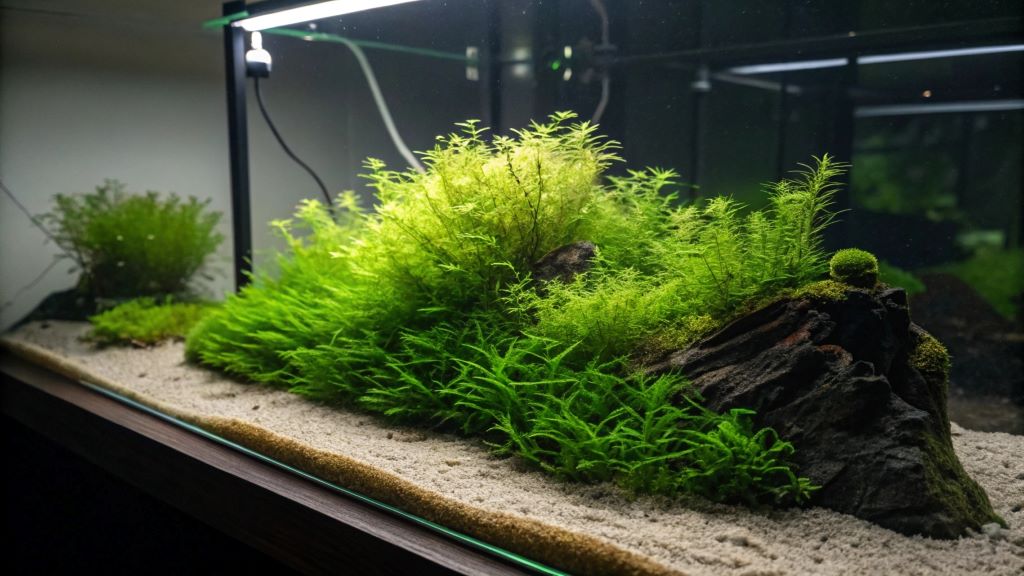
Java Moss is a versatile carpeting or floating plant that thrives even in low-light setups. It’s widely used for breeding tanks and shrimp habitats.
- Light requirements: Low
- Growth rate: Fast
- Uses: Backgrounds, carpets, hiding spots
It clings to surfaces naturally and creates a lush, natural look. Java Moss also reduces stress in fish by offering cover. Aquarists love its adaptability and ease of propagation—just trim and reattach.
-
Water Wisteria (Hygrophila difformis)
For those who prefer a fuller, bushy plant, Water Wisteria provides volume and vibrancy in dim setups.
- Light requirements: Low to moderate
- Growth rate: Fast
- Height: Up to 20 inches
Wisteria helps with water clarity by outcompeting algae for nutrients. It also absorbs excess nitrates, improving tank health. Its fast growth can, however, require occasional trimming, which some view as a benefit for scaping practice.
-
Amazon Sword (Echinodorus bleheri)
Amazon Swords are classic background plants for larger tanks. Though slightly more demanding, they can thrive in low light with root tabs.
- Light requirements: Low to medium
- Growth rate: Moderate
- Tank size: 20 gallons or more recommended
They develop long, wide leaves that fish love to swim through. With proper root nutrition, Amazon Swords flourish even without intense lighting.
How to Set Up a Successful Low-Light Planted Tank
Creating a thriving low-light aquarium doesn’t require a hefty budget. Use a basic LED light or fluorescent bulb with at least 0.5 watts per liter. Avoid overstocking your tank to reduce waste buildup.
Fertilization isn’t always necessary, but occasional liquid fertilizers or root tabs help sustain healthy growth. Avoid CO₂ systems initially—they add complexity and aren’t required for these plants.
Routine care includes:
- Weekly water changes (25-30%)
- Trimming dead leaves
- Ensuring plants aren’t shaded
Balanced light exposure (6–8 hours daily) prevents algae. An inexpensive timer can automate this and eliminate guesswork.
Frequently Asked Questions
- Can low-light plants survive without fertilizers?
Yes, many can. However, occasional feeding boosts growth and color vibrancy. - Do low-light plants need CO₂ injection?
No. These plants are ideal for non-CO₂ setups and still thrive in basic tanks. - How fast do low-light plants grow?
Most grow slowly. Java Moss and Water Wisteria are exceptions and grow quicker. - Can I mix different low-light plants in one tank?
Absolutely. Mixing adds depth, texture, and natural balance to your aquascape. - Will low-light plants reduce algae?
Yes, by competing for nutrients. Fast growers like Wisteria are especially helpful. - What’s the best substrate for low-light plants?
Inert gravel works for many, but root feeders like Amazon Sword prefer enriched substrates or root tabs. - Are these plants safe for all fish?
Generally, yes. But some fish, like goldfish, may nibble or uproot delicate species.
Final Thought
Choosing the best low-light aquarium plants for beginners sets the foundation for a stress-free aquascaping journey. With plants like Java Fern, Anubias, and Cryptocoryne Wendtii, you get beauty, resilience, and functionality all in one. These species adapt to basic setups, require minimal upkeep, and enhance fish health and tank aesthetics.
Start small, observe plant response, and adjust as you grow more confident. Aquariums evolve, and with the right plant choices, your underwater world will thrive—even in the dimmest corners of your home.
References:
- Tropica Plant Profiles – https://tropica.com
- Aquarium Co-Op Beginner Guides – https://www.aquariumcoop.com
- Aquatic Gardeners Association – https://www.aquatic-gardeners.org
Read More: