
Affordable Best Reef Aquarium Test Kit That Delivers Results
Healthy reef aquariums depend on stable water chemistry. Even minor swings in ammonia, alkalinity, or nitrate can stress corals and fish. According to the United States Environmental Protection Agency, ammonia levels as low as 0.02 mg per liter can harm aquatic life, while nitrate buildup contributes to algae growth and coral decline. Regular testing keeps these shifts visible before they become problems.
The best reef aquarium test kits range from quick dip strips to reagent based lab style kits. Each approach offers a different balance between speed, precision, and convenience. This guide walks through reliable, affordable testing tools that hobbyists consistently use in real reef setups. Instead of focusing on marketing claims, the reviews explore real usability, maintenance, and practical performance.
A Quick Overview of The Best Reef Aquarium Test Kit
These best reef aquarium test kits cover the essential water parameters reef keepers monitor most often.
- AAwipes 8 in 1 Aquarium Test Kit
- API Freshwater Master Test Kit
- 11 in 1 Aquarium Test Strips with Thermometer
- AAwipes Aquarium Carbonate and Alkalinity Test Kit
- API GH and KH Test Kit
- Tetra EasyStrips 6 in 1 Aquarium Test Strips
- API 5 in 1 Test Strips Freshwater and Saltwater
- API Nitrate Test Kit Freshwater and Saltwater
- Seachem Ammonia Alert Sensor
Best Reef Aquarium Test Kit of 2026
Each reef aquarium test kit below approaches water testing differently. Some prioritize quick daily checks, while others deliver deeper chemistry insight.
AAwipes 8 in 1 Aquarium Test Kit
Multi parameter strip testing

This strip kit feels built for routine monitoring. The container holds 50 strips and seals well, which helps protect against humidity damage. In practice, dipping a strip and comparing colors takes less than a minute, making it easy to maintain weekly testing habits.
The kit measures several parameters at once, including pH, nitrate, nitrite, hardness, and chlorine. That broad coverage suits mixed reef tanks where chemistry shifts quickly. Beginners benefit from the straightforward color chart, though experienced aquarists may want a reagent kit for confirming subtle readings.
Maintenance is simple. Keeping the container dry and checking expiration dates prevents inaccurate results. The kit struggles with ultra fine resolution, so it works best as a monitoring tool rather than diagnostic testing.
User Review
Mason L.
I use these for weekly reef checks. They are quick and help me spot nitrate spikes early. I still use liquid kits for confirmation, but these strips keep my routine consistent.
Key Features
• Eight parameter coverage helps detect multiple issues in one test
• Compact 50 strip bottle fits easily in aquarium cabinets
• Fast dip and read process encourages regular monitoring habits
• Clear color comparison chart supports beginner friendly use
• Minimal cleanup required reduces testing fatigue over time
Pros and Cons
| Pros | Cons |
| Very fast testing process | Limited fine accuracy |
| Covers multiple parameters | Color chart needs good lighting |
| Easy beginner learning curve | Strips degrade with humidity |
API Freshwater Master Test Kit
Reagent based precision testing
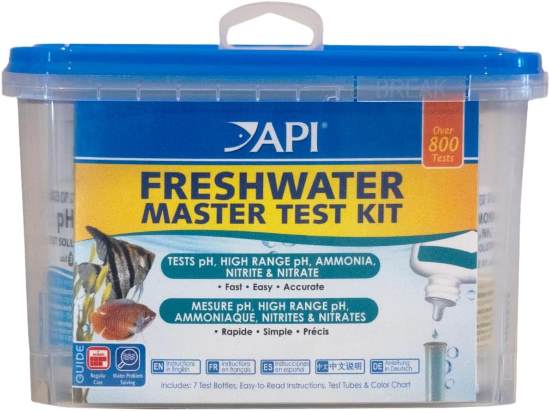
This classic liquid kit delivers detailed readings through dropper bottles and glass test tubes. The process takes longer than strip testing but provides clearer results, especially for ammonia and nitrite. Many reef hobbyists keep this kit as a reference standard.
Handling the bottles requires attention to shaking and measurement steps. The kit rewards patience with repeatable accuracy. It suits hobbyists managing new tank cycles or troubleshooting unexplained livestock stress.
Cleaning tubes after each use prevents residue buildup. The kit also requires good storage to avoid reagent degradation. While not the fastest option, it excels when accuracy matters most.
User Review
Daniel R.
I rely on this kit during tank cycling. The ammonia test helped me avoid early fish losses. It takes time, but the precision gives peace of mind.
Key Features
• Liquid reagent testing method offers higher resolution readings
• Large test capacity supports long term aquarium maintenance
• Glass test tubes included improve measurement consistency
• Clear color cards help interpret subtle chemistry changes
• Reliable ammonia detection aids early cycle management
Pros and Cons
| Pros | Cons |
| High measurement accuracy | Longer testing routine |
| Reliable cycle monitoring tool | Requires careful storage |
| Repeatable consistent results | Tube cleaning needed |
11 in 1 Aquarium Test Strips with Thermometer
All in one quick monitoring kit
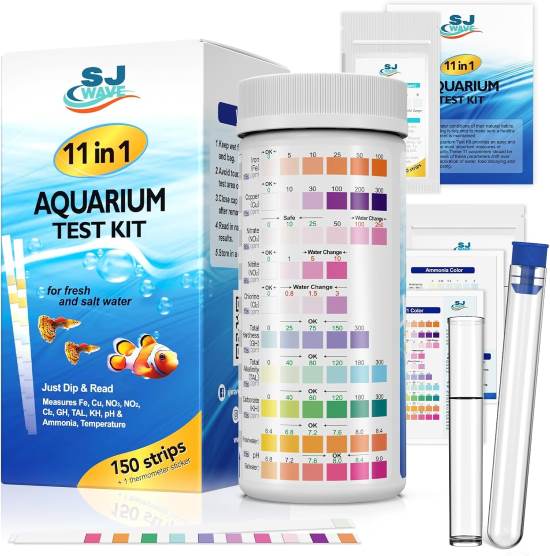
This kit expands strip testing by adding a thermometer strip. That combination helps reef keepers track temperature alongside water chemistry. The testing process mirrors other strip kits, with fast dipping and visual comparison.
The broader parameter range provides a useful snapshot for busy aquarists. It suits community reef tanks where small shifts across multiple values matter more than extreme precision.
Humidity protection remains essential. The thermometer strip offers convenience but lacks the accuracy of digital probes. As a daily monitoring solution, it performs reliably.
User Review
Sophie K.
I like having temperature and water testing together. It keeps my routine simple. I double check alkalinity with a separate kit when needed.
Key Features
• Eleven parameter coverage offers broad chemistry overview
• Integrated thermometer strip adds basic temperature tracking
• Quick testing workflow supports daily aquarium checks
• Portable container design suits travel or quarantine tanks
• Simple interpretation chart reduces beginner confusion
Pros and Cons
| Pros | Cons |
| Wide parameter coverage | Temperature reading less precise |
| Fast routine testing | Limited diagnostic detail |
| Good beginner usability | Sensitive to moisture exposure |
AAwipes Aquarium Carbonate and Alkalinity Test Kit
Focused KH stability monitoring
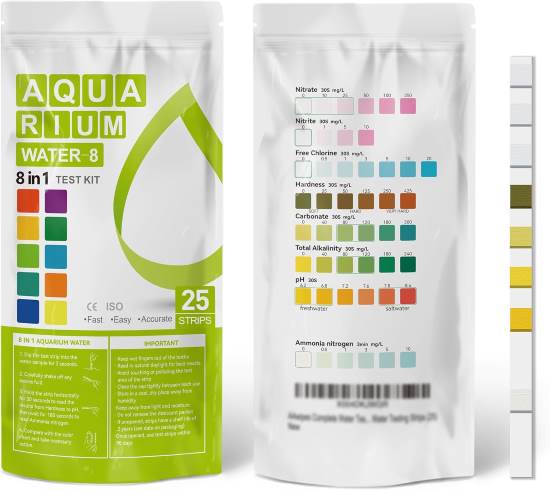
Alkalinity stability plays a central role in coral growth, and this kit targets that parameter directly. The test uses a drop counting method that feels straightforward after a few attempts. Results help reef keepers manage buffering and dosing schedules.
Because it measures only carbonate hardness, the kit works best as a supplement to broader testing tools. Reef tanks with heavy coral demand benefit most from this focused monitoring.
Routine calibration and consistent drop technique improve reliability. The kit performs well for dosing adjustments but does not replace full chemistry testing.
User Review
Rachel T.
My SPS corals react quickly to alkalinity swings. This kit helps me keep KH stable without complicated steps.
Key Features
• Dedicated alkalinity measurement supports coral health monitoring
• Simple drop count process makes routine KH checks manageable
• Compact bottle design stores easily near dosing equipment
• Clear result interpretation aids dosing adjustment decisions
• Consistent measurement range helps track stability trends
Pros and Cons
| Pros | Cons |
| Excellent alkalinity tracking | Single parameter limitation |
| Helpful for dosing routines | Requires careful drop counting |
| Clear KH trend monitoring | Not beginner all in one |
API GH and KH Test Kit
Hardness and buffering control
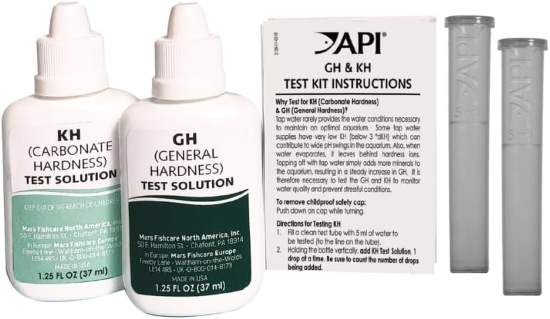
This kit measures both general hardness and carbonate hardness, providing insight into mineral content and buffering capacity. The drop based method mirrors other API tests, making it familiar for experienced hobbyists.
Reef keepers use it when adjusting water source blending or troubleshooting pH instability. The results guide remineralization and buffering strategies.
Consistent drop technique remains important. While not used daily, the kit becomes valuable during water source changes or coral growth adjustments.
User Review
Ethan W.
I tested my RO mix and discovered low KH. This kit helped me dial in my saltwater mix more accurately.
Key Features
• Dual GH and KH testing reveals mineral balance issues
• Drop based measurement method supports precise readings
• Compact reagent bottles store easily in aquarium cabinets
• Useful for water source testing aids mixing adjustments
• Clear color endpoint change simplifies result interpretation
Pros and Cons
| Pros | Cons |
| Dual hardness measurement | Not daily testing tool |
| Helpful mixing guidance | Drop counting learning curve |
| Consistent mineral tracking | Limited parameter scope |
Tetra EasyStrips 6 in 1 Aquarium Test Strips
Simple routine maintenance strips
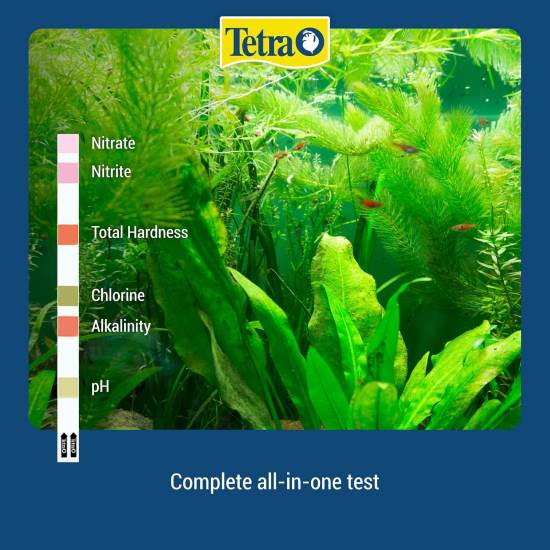
Tetra EasyStrips focus on quick, routine aquarium checks. The strips read multiple parameters within seconds, which makes them convenient for weekly maintenance routines. The compact packaging fits easily near aquarium supplies.
Results provide a general snapshot rather than deep analysis. Reef keepers often use them for early warning signs of nitrate or pH shifts. Lighting conditions can affect color interpretation, so reading results in natural light helps.
Proper storage remains essential. When kept dry, the strips maintain reliability across the container lifespan.
User Review
Liam P.
These strips help me stay consistent with testing. They are not lab precise, but they catch issues before they grow.
Key Features
• Six parameter monitoring covers common chemistry concerns
• Fast dip testing process supports weekly maintenance habits
• Compact packaging design suits small aquarium spaces
• Beginner friendly chart reduces learning curve barriers
• Low cleanup requirement simplifies ongoing testing routines
Pros and Cons
| Pros | Cons |
| Quick routine testing | Lower precision readings |
| Easy beginner friendly use | Chart needs bright lighting |
| Convenient compact storage | Limited reef parameter depth |
API 5 in 1 Test Strips Freshwater and Saltwater
Cross compatible strip testing
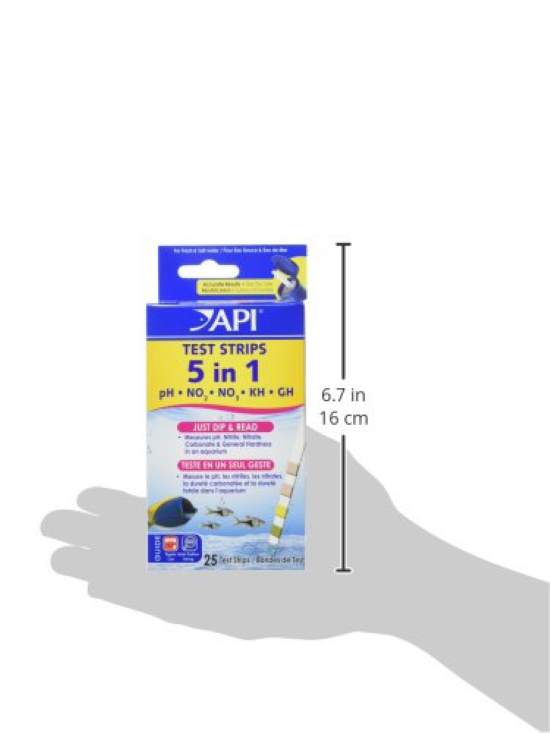
These strips work across freshwater and saltwater tanks, which benefits hobbyists managing multiple setups. The testing process remains quick and simple, delivering results in about a minute.
Reef keepers use them primarily for monitoring nitrate and nitrite trends. While coverage is slightly narrower than larger strip kits, the reliability feels consistent across readings.
Humidity protection and timely use prevent degradation. The strips work well as part of a layered testing routine alongside more precise kits.
User Review
Carla M.
I run both freshwater and reef tanks, so having one strip kit for both keeps things simple. It helps me catch nitrate changes quickly.
Key Features
• Freshwater and saltwater compatibility reduces product duplication
• Fast color comparison process supports quick tank checks
• Compact strip container stores easily in aquarium kits
• Reliable nitrate detection aids algae prevention efforts
• Low preparation requirement simplifies routine monitoring
Pros and Cons
| Pros | Cons |
| Cross tank compatibility | Narrower parameter coverage |
| Quick testing routine | Moderate accuracy range |
| Convenient everyday monitoring | Color reading sensitivity |
API Nitrate Test Kit Freshwater and Saltwater
Dedicated nitrate analysis

Nitrate control remains critical for reef stability, and this kit focuses on that parameter. The liquid reagent process requires shaking and waiting periods, but it provides detailed nitrate readings that strip kits often miss.
Reef hobbyists rely on this kit when battling algae or coral stress linked to nutrient buildup. The test supports dosing adjustments and water change planning.
Proper reagent mixing remains essential for consistent results. While specialized, the kit offers valuable insight for nutrient management.
User Review
Nathan J.
My reef struggled with algae until I used this kit. It showed higher nitrate than strips indicated, which helped me adjust feeding and water changes.
Key Features
• High resolution nitrate measurement improves nutrient management
• Liquid reagent method delivers detailed concentration insight
• Works in saltwater systems supports reef specific monitoring
• Clear color comparison chart aids trend tracking over time
• Supports algae prevention strategies guides maintenance planning
Pros and Cons
| Pros | Cons |
| Detailed nitrate insight | Requires mixing and waiting |
| Useful algae troubleshooting tool | Single parameter scope |
| Reliable reef nutrient monitoring | Learning curve for beginners |
Seachem Ammonia Alert Sensor
Continuous ammonia monitoring badge
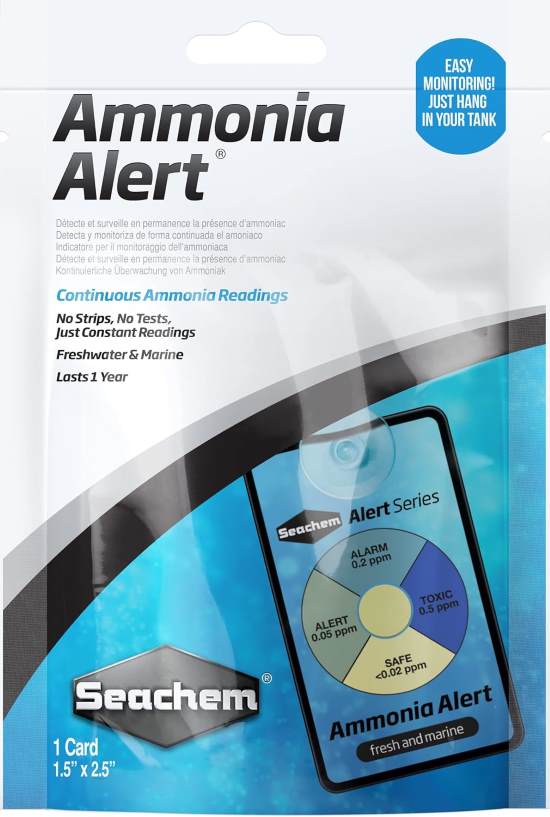
This sensor attaches inside the aquarium and continuously displays ammonia levels through a color indicator. Unlike traditional tests, it does not require dipping or mixing. That passive monitoring offers reassurance between scheduled tests.
The sensor works well in reef tanks where ammonia spikes pose immediate risk. It provides early warning but does not replace quantitative testing. Placement in good water flow improves response accuracy.
Periodic replacement keeps readings reliable. As a supplemental tool, it helps detect emergencies quickly.
User Review
Olivia S.
I keep this in my quarantine tank. It alerts me to ammonia spikes without constant testing, which reduces stress during fish acclimation.
Key Features
• Continuous ammonia detection offers real time safety monitoring
• No reagent or strip use simplifies aquarium maintenance routines
• Compact in tank badge design fits discreetly in aquascapes
• Visual color indicator system provides quick ammonia awareness
• Ideal quarantine tank support helps protect sensitive livestock
Pros and Cons
| Pros | Cons |
| Continuous ammonia awareness | Not quantitative measurement |
| No testing preparation required | Needs periodic replacement |
| Helpful emergency monitoring tool | Limited parameter coverage |
Buying Guide
Choosing an aquarium test kit involves more than picking the one with the most parameters. Long term success depends on understanding how different testing methods fit your routine, tank type, and experience level.
What Actually Matters Before Choosing
Core performance factors
Accuracy determines whether test results lead to meaningful action. Liquid kits typically offer finer resolution, which helps during tank cycling or coral stress troubleshooting. Many hobbyists assume strip tests provide equal precision, but they primarily serve as monitoring tools. Using both approaches often delivers better long term insight.
Material quality and durability
Reagent stability and strip protection affect consistency. Poorly sealed strip containers degrade quickly in humid fish rooms. Buyers often overlook storage conditions, yet degraded reagents produce misleading readings. Durable packaging and proper storage habits directly influence reliability.
Usability considerations
Testing complexity influences consistency more than accuracy. A precise kit that feels tedious may reduce testing frequency. Beginners sometimes prioritize advanced kits without considering routine effort. Simpler workflows often produce better long term maintenance habits.
Maintenance demands
Liquid kits require cleaning tubes and shaking reagents, while sensors need periodic replacement. Hobbyists frequently underestimate this upkeep. Over time, neglected maintenance reduces accuracy and increases frustration. Matching maintenance demands to personal routine prevents testing burnout.
Environmental compatibility
Some kits function better in saltwater due to calibration and parameter focus. Buyers occasionally assume freshwater kits translate perfectly to reef systems. Ensuring saltwater compatibility avoids interpretation errors and chemistry blind spots.
Safety considerations
Reagents require careful handling and storage away from children and pets. Strips reduce chemical exposure but introduce humidity sensitivity. Understanding these tradeoffs improves both safety and product lifespan.
Common Buyer Mistakes
Many hobbyists assume more parameters automatically equal better testing. In practice, broader kits may sacrifice precision. Evaluating which parameters matter most for your reef leads to more useful monitoring.
Another frequent mistake involves ignoring testing frequency. Some buyers choose complex kits but test infrequently due to time demands. Consistency often matters more than laboratory level accuracy.
Humidity damage remains widely overlooked. Strip kits stored near aquariums without proper sealing degrade quickly. Buyers often blame product quality instead of storage conditions.
Misinterpreting color charts also causes frustration. Lighting conditions affect perceived color changes, leading to inconsistent readings. Testing under natural light or consistent indoor lighting improves interpretation.
Overreliance on single parameter kits presents another issue. While specialized tests offer precision, they cannot reveal broader chemistry interactions. Balanced testing routines prevent incomplete diagnosis.
Finally, many reef keepers skip calibration or technique practice. Drop counting accuracy and reagent mixing directly affect results. Taking time to learn proper technique improves reliability.
Related:
The Ohtomber Aquascape Tools Kit That Makes Plant Care a Breeze
The Best Budget Aquarium Kits for Starters
How to Match Products to Specific Needs
Casual users
Hobbyists with stable reef tanks often benefit from strip kits that support quick weekly checks. These tools help detect early shifts without adding testing fatigue.
Heavy daily users
Advanced reef keepers managing coral dense systems typically combine strip monitoring with liquid kits. This layered approach balances convenience and precision for nutrient and alkalinity control.
Small space or portability needs
Compact strip containers and sensor badges suit nano tanks or travel setups. Their minimal footprint simplifies storage and transport.
Budget conscious longevity seekers
Reagent kits with high test capacity often deliver long term value through extended use. Pairing them with selective strip monitoring reduces reagent consumption.
Advanced users
Experienced aquarists usually rely on targeted kits such as alkalinity or nitrate tests alongside broader monitoring tools. This focused strategy supports dosing precision and coral growth optimization.
Conclusion
Reliable reef aquarium testing depends on consistency, not just precision. Strip kits simplify routine monitoring, while liquid kits provide deeper chemistry insight when problems arise. Specialized tests and sensors add targeted awareness for parameters like alkalinity and ammonia.
The best approach often combines multiple tools that fit your routine and tank demands. By focusing on usability, storage habits, and parameter priorities, hobbyists can maintain stable reef environments without unnecessary complexity.
Exploring the options above helps clarify which testing style aligns with your reef goals and maintenance habits.
FAQs
How often should reef aquariums be tested
Weekly monitoring with additional testing during changes or livestock stress works well.
Are strip tests accurate enough for reef tanks
They work for routine monitoring but benefit from confirmation using liquid kits.
Which parameter matters most in reef aquariums
Ammonia, nitrate, alkalinity, and pH all play critical roles in stability.
Do sensors replace traditional test kits
Sensors provide alerts but still require confirmation through manual testing.
Can freshwater kits work in reef aquariums
Some do, but saltwater calibrated kits offer more reliable interpretation.