How to Dose API Tap Water Conditioner
To dose API Tap Water Conditioner correctly, add 1 ml for every 20 gallons of aquarium water or follow the product label for your bottle size. Always measure the amount based on the water you are treating, not the total tank volume during partial water changes.
Healthy aquarium water supports fish survival because untreated tap water often contains chlorine or chloramine. Studies show chlorine can damage fish gills within minutes, while regular water conditioning greatly improves aquarium stability. Therefore, understanding proper dosing protects aquatic life and prevents unnecessary stress. You can also learn more about API tap water conditioner before selecting the right product for your aquarium.
Why Correct Dosing Matters
Every water conditioner works within a recommended concentration range. Proper dosing removes harmful chemicals without creating unnecessary product waste.
Additionally, accurate dosing keeps fish comfortable during water changes. Consistent treatment also helps beneficial bacteria remain healthy inside the biological filter.

What API Tap Water Conditioner Does
API Tap Water Conditioner neutralizes chlorine and detoxifies chloramines commonly found in tap water. It also helps reduce heavy metal toxicity that may affect sensitive fish.
As a result, treated water becomes safer before entering your aquarium. Fish experience less stress and adapt more comfortably after water changes.
How Much API Tap Water Conditioner to Use
The standard recommendation equals 1 ml for every 20 gallons of water. Always verify your bottle label because packaging instructions may change over time.
Quick Dosing Guide
- 5 gallons: 0.25 ml
- 10 gallons: 0.5 ml
- 20 gallons: 1 ml
- 40 gallons: 2 ml
- 55 gallons: 2.75 ml
- 75 gallons: 3.75 ml
- 100 gallons: 5 ml
Measure carefully using the included cap, syringe, or measuring pipette. Accurate measurements provide consistent water quality after every maintenance session.
How to Dose During Water Changes
Treat only the new water entering your aquarium during partial water changes. You do not need to dose the entire aquarium unless replacing all water.
- Determine how many gallons you will replace.
- Calculate the required conditioner amount.
- Add the conditioner to fresh tap water.
- Mix briefly before adding water into the aquarium.
- Slowly refill the tank to reduce fish stress.
This simple routine prevents accidental overdosing and keeps water chemistry stable. Regular maintenance becomes easier with the same consistent process.
Can You Add the Conditioner Directly to the Tank?
Yes, you can add it directly before introducing fresh tap water during maintenance. However, distributing the product evenly improves overall protection.
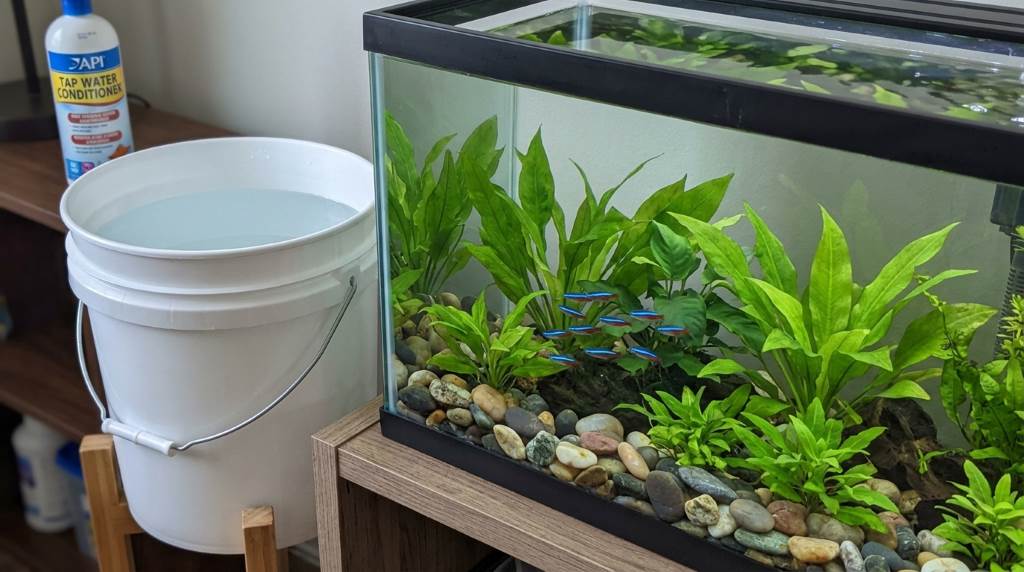
Many experienced aquarists still prefer treating replacement water inside a bucket first. This approach ensures complete mixing before water reaches the aquarium.
How to Measure Small Doses Accurately
Small aquariums require tiny conditioner amounts that are difficult to estimate visually. Therefore, use a syringe marked in milliliters for better precision.
A measuring pipette also works well for nano aquariums. Precise dosing helps avoid inconsistent treatment between water changes.
Common Dosing Mistakes
Many beginners accidentally calculate the full aquarium volume instead of replacement water. Consequently, they use more conditioner than necessary.
Others guess measurements without proper tools, causing inconsistent results over time. Reading the product instructions before every use prevents these common errors.
- Estimating instead of measuring.
- Ignoring updated label instructions.
- Treating total volume during partial changes.
- Skipping conditioner during small water additions.
- Using expired aquarium products.
What Happens If You Use Too Much?
Small accidental overdoses rarely create serious problems for most freshwater aquariums. Nevertheless, repeated excessive dosing wastes product and should be avoided.
If significant overdosing occurs, monitor fish behavior carefully for unusual stress. Perform a moderate water change if recommended by the manufacturer.
Should Every Water Change Include Conditioner?
Yes, every addition of untreated tap water should receive conditioner first. Chlorine enters with every refill regardless of replacement volume.
Therefore, never skip treatment because even small water additions may expose fish to harmful disinfectants. Consistency protects both fish and beneficial bacteria.
Helpful Tips for Better Results
- Store the bottle in a cool, dry location.
- Shake the container before each use.
- Use clean measuring equipment.
- Label your maintenance tools clearly.
- Record water change amounts for consistent dosing.
- Replace expired aquarium products promptly.
Following these habits creates predictable maintenance routines throughout the year. Consequently, your aquarium remains healthier with fewer avoidable problems.
When Extra Conditioner May Be Needed
Some municipalities temporarily increase disinfectant levels during seasonal water treatment. Therefore, always check your local water quality reports when problems appear.
If your water supplier changes treatment methods, follow updated manufacturer guidance carefully. Never increase dosage without verifying official recommendations.
Conclusion
Correctly dosing API Tap Water Conditioner keeps aquarium water safe by neutralizing harmful tap water chemicals before fish exposure. Measuring accurately during every water change provides reliable protection and supports long term aquarium health.
Keep a measuring syringe nearby, follow the label instructions carefully, and maintain a consistent maintenance schedule. Your fish will benefit from cleaner, safer, and more stable water conditions.
Frequently Asked Questions
Can I overdose API Tap Water Conditioner?
Small accidental overdoses are usually tolerated, but correct measurements remain the safest approach.
Should I treat the whole tank during water changes?
No, treat only the amount of fresh water being added during partial changes.
Can I add fish immediately after dosing?
Yes, treated water is generally safe immediately after proper mixing.
Do I need conditioner for every refill?
Yes, every addition of untreated tap water requires conditioner before entering the aquarium.
What is the easiest way to measure small amounts?
A milliliter syringe provides the most accurate measurements for small aquariums.