
How to Choose a Mahancris Aquarium Stand
Choose a Mahancris aquarium stand by matching your tank’s footprint, loaded weight, and required support capacity first. Then evaluate construction, leveling, moisture resistance, storage, assembly, and power access before buying. A useful starting point is the Mahancris Aquarium Stand, but the right model depends on your specific aquarium setup.
Water weighs about 8.34 pounds per gallon, so even a modest aquarium creates substantial structural pressure. For example, a 40-gallon tank can hold more than 333 pounds of water before adding glass, substrate, rocks, and equipment.
That makes an aquarium stand more than decorative furniture. It becomes part of the tank’s support system, so a poor match can create instability, uneven loading, or costly water damage.
Key Takeaways
- Match the stand’s top dimensions to the aquarium footprint, not just the gallon rating.
- Calculate the filled aquarium weight before comparing load capacities.
- Choose a stand with meaningful capacity headroom rather than an exact weight match.
- Check leveling, floor contact, and structural stability before placing the tank.
- Consider moisture resistance when your aquarium produces frequent splashes or humidity.
- Use storage and power features only when they improve your actual maintenance routine.
Start With Your Aquarium’s Real Requirements
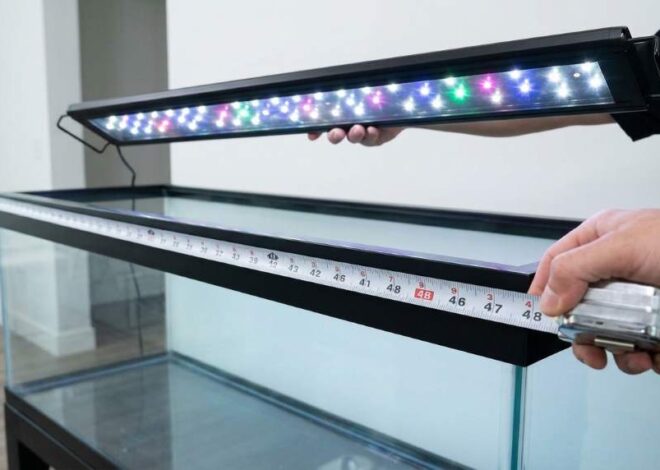
Before comparing Mahancris models, measure the aquarium itself from edge to edge. Record its length, width, height, approximate filled weight, and equipment requirements.
Next, check whether your aquarium has a rimmed or rimless design. Some tanks require continuous support beneath the entire base, while others follow specific manufacturer support instructions.
Therefore, never assume that a stand fits simply because its gallon rating matches your aquarium. A narrow stand can create an unsafe overhang even when its listed capacity looks sufficient.
Measure the Tank Footprint
Measure the actual tank base rather than relying only on the advertised gallon size. Different aquarium shapes can hold similar volumes while requiring very different support surfaces.
Also measure the available floor area before choosing a stand. Leave enough surrounding space for cords, maintenance access, ventilation, and comfortable cleaning.
Finally, compare the tank footprint with the stand’s top dimensions. The safest choice normally provides a stable, properly supported base without forcing the aquarium beyond the intended support area.
Calculate the Fully Loaded Aquarium Weight
Gallons provide a useful starting point, but they do not represent the complete load. You should account for water, glass, substrate, rocks, wood, filters, lighting, and other permanent equipment.
Use this simple estimate: water weight equals gallons multiplied by approximately 8.34 pounds. Then add the aquarium’s empty weight and the weight of hardscape, substrate, equipment, and decorations.
For instance, 55 gallons of water alone weigh about 459 pounds. Once you add the tank and aquascaping materials, the actual load becomes considerably higher.
Build in Capacity Headroom
Do not choose a stand that barely meets your estimated load. Instead, select a model with meaningful capacity above the aquarium’s fully loaded weight.
That extra capacity gives you more practical margin when you add substrate, larger rocks, equipment, or additional decorations later. It also prevents you from operating continuously at the edge of the listed rating.
However, do not treat a published capacity as permission to exceed the manufacturer’s tank-size recommendation. Capacity and compatible aquarium dimensions solve different problems.
Compare Mahancris Stand Sizes Carefully
Mahancris offers aquarium stands across several tank ranges, so your first comparison should focus on physical compatibility. Current models include options for smaller tanks and larger 55 to 75 gallon setups.
For example, the 20-gallon model measures about 24 inches long by 11.8 inches wide. Its listed top capacity reaches 450 pounds, which provides substantial numerical headroom for a properly sized aquarium.
The 20 to 37 gallon model measures approximately 30.7 inches long by 13.8 inches wide. Its listed maximum weight capacity reaches 400 pounds, showing why gallon ratings and load ratings require separate evaluation.
Meanwhile, the 40 to 50 gallon model measures about 36.2 inches long by 19.7 inches wide. Its listed maximum capacity reaches 660 pounds, making footprint and loaded-weight checks especially important for larger setups.
Use a Size-First Comparison
| Stand Range | Approximate Dimensions | Listed Capacity | Best Selection Check |
|---|---|---|---|
| 20 Gallon | 24 x 11.8 inches | 450 pounds | Verify exact tank footprint |
| 20 to 37 Gallon | 30.7 x 13.8 inches | 400 pounds | Compare length and width carefully |
| 40 to 50 Gallon | 36.2 x 19.7 inches | 660 pounds | Calculate complete loaded weight |
| 55 to 75 Gallon | 52 x 19.7 inches | 800 pounds top | Confirm aquarium footprint and floor strength |
These figures illustrate an important point: larger does not automatically mean better. Choose the smallest suitable stand that correctly supports your aquarium and leaves enough working space.
Inspect Construction Before You Buy
Construction quality affects how consistently a stand handles a heavy aquarium. Look for a combination of strong framing, stable joints, appropriate panels, and reliable floor contact.
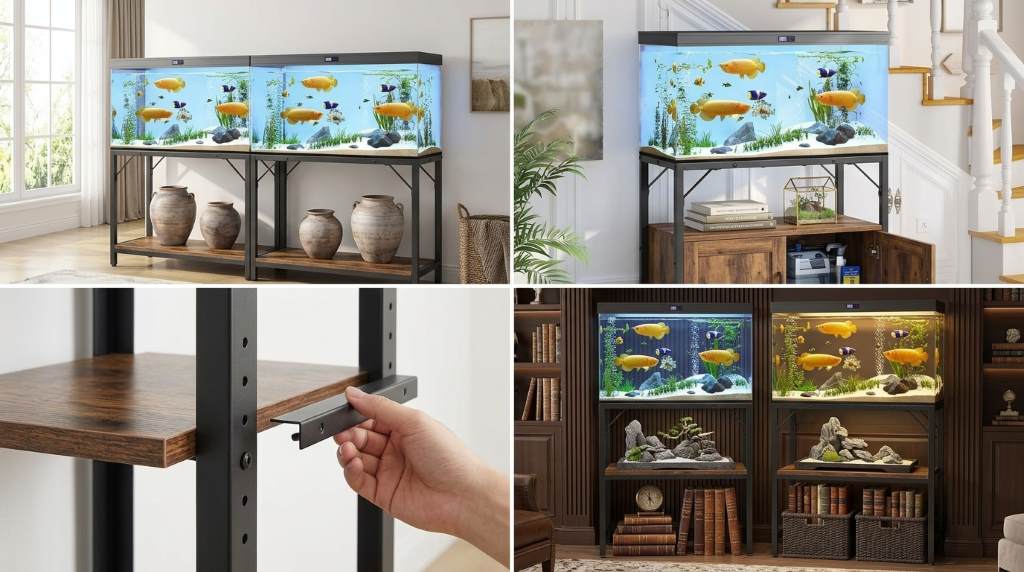
Many Mahancris aquarium stands combine engineered wood with metal components. This combination can balance visual appeal, structural support, storage, and reasonable weight.
Still, material names alone cannot prove suitability. Examine the stand’s dimensions, support layout, stated capacity, and intended tank range together.
Look for Stable Load Distribution
A good aquarium stand should transfer the tank’s load toward the floor without obvious flexing or rocking. Cross-bracing and properly positioned supports can improve overall rigidity.
Additionally, inspect the top surface for uniform support. A strong frame cannot compensate for an unsuitable or uneven contact surface beneath the aquarium.
After assembly, push gently against several sides of the stand. Any unexpected rocking deserves correction before you place a filled aquarium on top.
Prioritize Leveling and Floor Contact
Leveling often receives less attention than appearance, yet it remains one of the most important installation checks. An aquarium stand should sit securely on a suitable floor without rocking.
Place the stand where you intend to use it and verify its level before adding the aquarium. Check both the front-to-back and side-to-side directions.
If the floor has irregularities, address them using an appropriate leveling method that preserves stable, continuous support. Never improvise with unstable objects that can compress, shift, or slide.
Check the Aquarium After Placement
Once the aquarium sits on the stand, check the tank again before filling it completely. Watch for unexpected gaps, rocking, shifting, or visible distortion.
Then fill the tank gradually while observing the stand and aquarium. Stop immediately if you notice movement, unusual noises, or changing alignment.
This simple inspection can reveal problems before the aquarium reaches its maximum load. It also confirms that your floor and stand work together as intended.
Consider Moisture and Humidity Exposure
Aquariums naturally create a damp environment around their stands. Water can splash during maintenance, while condensation can increase humidity around enclosed storage areas.
For that reason, moisture resistance matters when selecting materials and planning placement. Mahancris models with metal components and protective finishes can offer practical advantages in aquarium environments.
Even moisture-resistant materials benefit from sensible maintenance. Wipe spills promptly, avoid leaving wet equipment on shelves, and keep ventilation paths clear.
Protect the Stand During Maintenance
Use towels or absorbent mats around areas where water frequently lands. Keep buckets, hoses, and cleaning tools positioned so accidental spills do not remain against panels.
Also inspect lower shelves periodically for swelling, corrosion, loose hardware, or persistent dampness. Early maintenance costs far less than replacing damaged furniture.
Decide Whether Storage Features Matter
Storage can turn an aquarium stand into a useful maintenance station. Shelves can hold fish food, water-treatment products, nets, test equipment, and cleaning supplies.
However, storage should support your routine rather than dictate it. Choose compartments based on what you actually use instead of paying extra for unused furniture features.
Keep heavy items positioned sensibly and avoid overloading shelves. Never assume that a stand’s aquarium capacity also applies equally to every lower shelf.
Keep Aquarium Supplies Organized
- Store frequently used maintenance tools where you can reach them quickly.
- Keep food containers sealed and away from splash-prone areas.
- Separate electrical equipment from wet supplies whenever possible.
- Avoid storing excessive weight on shelves with separate load ratings.
- Leave enough room around equipment for inspection and cleaning.
Good organization reduces maintenance friction and helps you spot leaks or equipment problems sooner. Therefore, storage becomes valuable when it improves access without compromising stability.
Evaluate Power and Cable Management
Some Mahancris aquarium stands include integrated power outlets or USB ports. These features can simplify equipment placement when the stand supports filters, pumps, lights, or other electrical devices.
Nevertheless, convenience should never replace electrical safety. Keep power connections away from direct water exposure and create appropriate drip loops for aquarium equipment.
Before choosing a power-equipped model, identify how many devices you normally operate. Then consider cable routing, outlet access, and whether your existing electrical setup can safely support the equipment.
Keep Water Away From Electrical Connections
Route cords so water cannot travel directly toward an outlet or power connection. Secure loose cables where appropriate and keep plugs elevated from likely spill zones.
Use properly rated electrical equipment and follow the instructions supplied with your aquarium devices. When in doubt, ask a qualified professional to evaluate the electrical installation.
Think About Assembly Before Ordering
Many aquarium stands arrive as flat-packed furniture that requires assembly. Assembly quality matters because loose connections can reduce rigidity and create unnecessary movement.
Read the instructions before starting and identify every panel, fastener, bracket, and support component. Then assemble the stand on a flat surface whenever possible.
Do not rush the final tightening stage. Check each connection again after the frame becomes fully assembled and stable.
Perform a Pre-Tank Stability Check
- Confirm that every required fastener sits correctly.
- Check that the frame stands square on the floor.
- Inspect shelves for proper seating and alignment.
- Verify that doors or panels do not force the frame sideways.
- Test the assembled stand for unwanted rocking.
Most assembly problems become easier to correct before the aquarium arrives. Therefore, complete the stability inspection before transferring any heavy equipment.
Match the Stand to Your Room
An aquarium stand should fit your room as carefully as it fits your tank. Measure doorways, pathways, corners, and nearby furniture before ordering a larger model.
Also consider viewing height and maintenance access. A stand that places the aquarium too high can make feeding, cleaning, and water changes uncomfortable.
Leave enough clearance behind the aquarium for hoses, electrical cables, and equipment connections. Good planning prevents you from pushing the tank against a wall after installation.
Avoid These Common Buying Mistakes
Several mistakes appear repeatedly when shoppers compare aquarium stands. Most result from treating the gallon rating as the only important specification.
- Choosing by gallon rating without measuring the aquarium footprint.
- Ignoring the weight of substrate, rocks, decorations, and equipment.
- Selecting a capacity that barely matches the estimated load.
- Using unstable household furniture as an aquarium substitute.
- Skipping the leveling check during installation.
- Overloading storage shelves because the top has a higher rating.
- Ignoring moisture exposure around wood-based components.
- Rushing assembly and failing to retighten structural connections.
These mistakes can turn an otherwise attractive stand into a poor long-term choice. A careful specification check usually takes minutes and can prevent expensive problems later.
A Practical Mahancris Selection Checklist
Use a simple checklist before you commit to a model. This approach keeps the decision focused on structural requirements instead of appearance alone.
- Tank footprint: Confirm the stand supports your aquarium’s complete base.
- Loaded weight: Calculate water, glass, substrate, hardscape, and equipment.
- Capacity: Choose suitable headroom above the estimated total load.
- Construction: Review metal framing, panels, joints, and support layout.
- Leveling: Confirm stable floor contact before filling the tank.
- Moisture: Consider humidity, splashes, and your maintenance habits.
- Storage: Select only the shelf space your equipment actually needs.
- Power: Evaluate outlet placement and electrical safety requirements.
- Assembly: Allow enough time for careful construction and inspection.
- Room fit: Measure the installation area and surrounding access points.
How to Make the Final Choice
Start by eliminating every model that fails your aquarium’s footprint requirement. Next, remove options that lack adequate load capacity or suitable support for your tank design.
Then compare the remaining stands according to construction, leveling, storage, moisture management, and installation convenience. Finally, choose the model that supports your aquarium without adding unnecessary complexity.
This process works better than choosing the most attractive stand first. Structural compatibility should decide the shortlist, while style and convenience should decide the final preference.
Frequently Asked Questions
What should I check first when choosing a Mahancris aquarium stand?
Check the aquarium footprint and fully loaded weight first because those factors determine basic compatibility.
Can I choose a stand based only on gallon capacity?
No, because two aquariums with the same gallon capacity can have different footprints and support requirements.
How much extra weight capacity should an aquarium stand have?
Choose meaningful capacity headroom above your calculated loaded weight rather than matching the number exactly.
Are Mahancris stands suitable for larger aquariums?
Some Mahancris models support larger tanks, but you should verify the exact dimensions and capacity for your aquarium.
Should I level the stand before filling the aquarium?
Yes, always verify stable and level support before filling the aquarium to its operating level.
Final Thoughts
The best Mahancris aquarium stand is the one that matches your tank’s footprint, load, environment, and maintenance routine. Capacity matters, but stable geometry, proper leveling, construction, moisture management, and practical access matter too.
Before purchasing, measure your aquarium, calculate its complete loaded weight, and compare those figures against the exact stand specifications. Then choose the model that provides dependable support while making everyday aquarium care easier.
Ready to narrow your options? Start with your aquarium’s dimensions and loaded weight, then use the checklist above to select the Mahancris stand that fits your setup most confidently.