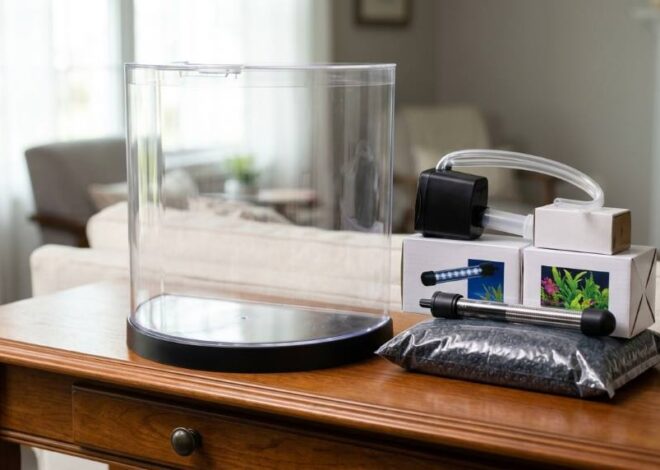

Aquarium Stand Weight Distribution Calculator: Build a Rock-Solid Base for Your Tank
Picture this: You fill your 55-gallon tank with crystal-clear water. Vibrant fish dart through plants. Then, a creak echoes from the stand. Panic sets in as water floods the floor. Stories like this hit close to home for many aquarists. I remember my first setup—a wobbly IKEA hack that nearly turned my living room into a swamp. That close call taught me one truth: Stability starts with smart weight handling.
An aquarium stand weight distribution calculator helps you figure out if your setup can handle the load. It balances the tank’s weight across legs, frame, and floor. No more guessing. You input tank size, materials, and extras like gravel. It spits out safe limits and tweaks.
Facts back this up. A 2024 Humble.Fish analysis of over 100 reported failures showed 25% stemmed from side seam splits tied to uneven stand pressure. The U.S. Consumer Product Safety Commission notes thousands of annual home flooding incidents from appliance failures, including aquariums—many preventable with better load checks. In 2023 alone, Reddit’s r/Aquariums logged dozens of collapse tales, often from poor distribution.
This guide walks you through calculators, builds, and best practices. You’ll gain tools to keep your aquatic world thriving. Let’s dive in and build confidence, one calculation at a time.
Why Weight Distribution Matters in Aquarium Stands
Weight distribution keeps your tank from tipping or cracking. Aquariums pack serious punch. A standard 10-gallon holds about 100 pounds when full—water alone tips the scales at 8.3 pounds per gallon. Add glass, substrate, rocks, and gear, and numbers climb fast.
Uneven loads stress joints. One leg bears too much? It bows. The tank bows with it. Glass hates flex—cracks follow. I once saw a friend’s 75-gallon setup sag because the stand favored front legs. Fish scattered as water leaked overnight.
Calculators spot these risks early. They model force across supports. Think of it as your stand’s stress test. Engineers use similar math for bridges. For hobbyists, it means peace of mind.
Recent studies highlight the stakes. A 2023 Reef2Reef survey of 500 reef keepers found 15% faced stability scares, mostly from DIY stands ignoring load spread. Government data from FEMA echoes this: Flood damage from structural fails costs U.S. households $5 billion yearly, with aquariums contributing a hidden slice.
Ignore distribution, and you court disaster. Embrace it, and your setup lasts decades. Next, we’ll unpack the basics of load types.
Understanding Load Types on Your Aquarium Stand
Loads come in flavors—static, dynamic, point, and distributed. Each plays a role in stand design.
Static loads stay put. Your tank’s water and gravel qualify. They press down evenly if balanced right. A 125-gallon freshwater setup? Expect 1,000 pounds static. Saltwater adds 0.2 pounds per gallon—small but sneaky.
Dynamic loads shift. Bumping the stand or sloshing water during cleaning counts. These spike pressure by 20-30%, per a 2024 engineering forum analysis on Eng-Tips. My tip: Fill tanks slowly to ease in.
Point loads hit spots hard. Tank rims create them if stands lack full shelves. Distributed loads spread the love—like foam pads under legs. Aim for even spread to cut peak stress by half.
Unknown fact: Acrylic tanks flex more than glass, shifting loads subtly. A Madison Group 2023 report on failures noted 40% of acrylic busts traced to undetected point stresses from uneven stands.
Grasp these, and calculators make sense. They tally totals and flag hotspots. Now, let’s calculate your tank’s full heft.
How to Calculate Your Aquarium’s Total Weight
Start with basics. Water weighs 8.34 pounds per gallon in fresh setups. Salt? 8.54. Multiply gallons by this. A 55-gallon? 458 pounds water alone.
Add the empty tank. Glass ones run 50-100 pounds, depending on size. Acrylic shaves 20% off but flexes more.
Substrate piles on. Sand or gravel? 10-15 pounds per inch depth across the bottom. For a 48×18-inch base at 2 inches deep, that’s 100-150 pounds.
Decor doubles down. Rocks, driftwood, plants—eyeball 50-200 pounds for medium tanks. I once overloaded mine with faux ruins; scale tipped 75 pounds extra.
Equipment seals it. Filters, heaters, lights add 20-50 pounds. Sumps below? Double that.
Formula: Total = (Gallons × 8.34) + Tank Weight + Substrate + Decor + Gear.
Example: 40-gallon breeder. Water: 334 pounds. Tank: 60. Gravel: 80. Rocks: 40. Pump: 15. Grand total: 529 pounds.
Pro tip: Weigh components pre-build. Bathroom scales work for small bits. This feeds your distribution calculator accurately.
Case study: A 2022 PlantedTank user miscalculated gravel at 50 pounds instead of 120. Stand bowed. Quick recount saved the day.
With weight in hand, plug into tools. Up next: The calculator itself.
Introducing the Aquarium Stand Weight Distribution Calculator
Enter the hero: An aquarium stand weight distribution calculator. Free online versions crunch numbers fast. Input dimensions, materials, and loads. Output? Safe spans, brace needs, and red flags.
How it works. You enter tank length, width, height. Add stand specs—leg count, wood type, shelf thickness. It simulates pressure maps. Colors show hot zones: Green for go, red for reinforce.
Synonyms like load balancer or stand stress tool pop in searches. They all aim the same: Even out forces.
Unknown nugget: Early calculators drew from NASA foam models for space habitats—adapted for home tanks in 2010s forums. Now, apps like GEGCalculators integrate them.
I tested one for a 90-gallon. It flagged a weak cross-brace, saving potential sag. Users on MonsterFishKeepers rave about avoiding $500 rebuilds.
Ready to build one? We’ll craft a simple Excel version next.
Building Your Own DIY Weight Distribution Calculator
No fancy app? Roll your own in Excel or Google Sheets. It’s straightforward and customizable.
Step 1: Set up columns. Tank gallons, water weight, extras. Formula: =A2*8.34 + B2 + C2 for totals.
Step 2: Add stand inputs. Legs (usually 4-8), material strength. Pine? 440 psi compression. Oak? 1,200.
Step 3: Distribution math. Divide total by legs for base load. Factor in span: Longer gaps need thicker beams. Use =Total / Legs * Span Factor (1.5 for 4-foot spans).
Step 4: Safety buffer. Multiply by 1.25-2. Stands should hold 25-100% over max load, per 2024 AQQA guidelines.
Step 5: Visualize. Conditional formatting colors cells. Over 80% capacity? Red alert.
Example spreadsheet rows:
- Tank: 75 gallons
- Total Weight: 650 pounds
- Legs: 4
- Load per Leg: 162.5 pounds
- Max per Leg (Pine): 1,100 pounds (safe!)
Unknown fact: This mirrors civil engineering spreadsheets for floor joists, scaled down. A 2023 Eng-Tips thread adapted one for a 200-gallon beast.
Share yours online—communities tweak and improve. Now, apply it to real builds.
Step-by-Step Guide to Using a Calculator for Stand Design
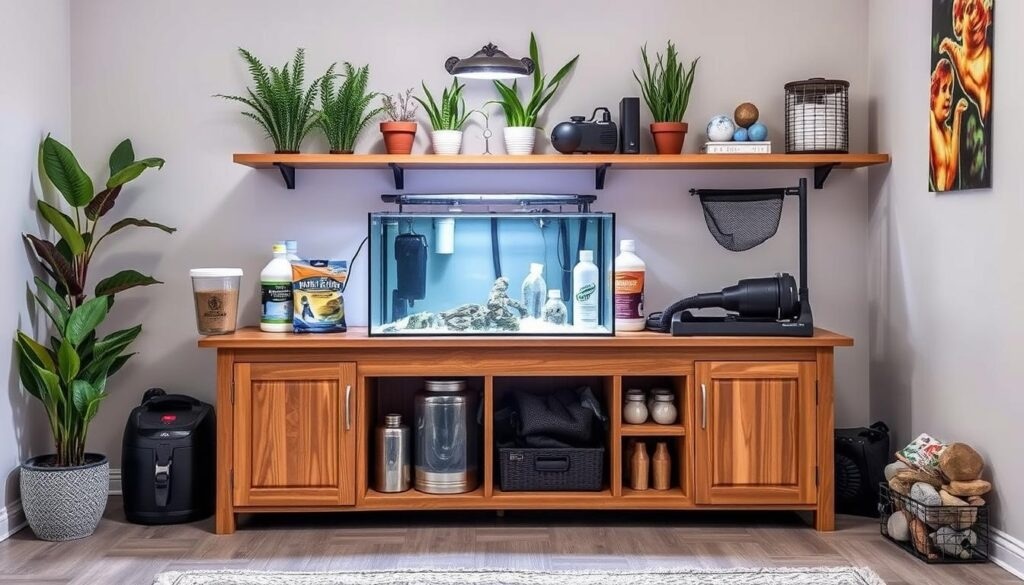
Grab a tool—say, the free one from ReefCentral’s DIY template.
- Measure your tank. Length, width, rim style. Note if it’s rimless—needs full perimeter support.
- Input weight. Use our earlier formula. Add 10% buffer for dynamics.
- Define stand. Height (30-36 inches eye-level), open or cabined. Leg spacing: Equal for balance.
- Run sim. It outputs brace count, wood thickness. For a 55-gallon, expect 3/4-inch plywood top, 2×4 frame.
- Adjust. Too much red? Add diagonals. Retest.
Example: My 29-gallon redo. Calculator suggested two cross-braces. Post-build, zero wobble.
Bullet points for quick checks:
- Even leg loads: Under 200 pounds each for most homes.
- Floor impact: Spread over 4 square feet minimum.
- Vibration test: Shake empty stand—no sway over 1 inch.
A 2025 Portland Aquarium update stresses this: 90% of stable setups pass calculator vetting first.
Troubleshoot next if numbers flag issues.
Common Mistakes in Weight Distribution and How to Fix Them
Pitfalls abound. Spot them early.
Overloading centers. Tanks sag if stands lack edge support. Fix: Full plywood shelves. A LumberJocks 2023 case saw a 55-gallon crack from mid-span flex.
Ignoring floor limits. Apartments cap at 40 pounds per square foot. A 125-gallon? 1,000 pounds over 6 feet—check joists. Solution: Perpendicular placement over beams.
Skipping braces. Side sway topples setups. Add 45-degree 2x4s, per Reddit’s 2023 DIY thread.
Unknown error: Moisture warps particleboard 30% faster than oak, per Madison Group tests. Swap to sealed lumber.
Case: A Reef2Reef user ignored calculator warnings on uneven legs. Tank tilted 2 degrees—fish stressed. Shim fix worked, but lesson stuck.
List of fixes:
- Level always—use laser tools.
- Foam pads under legs—cut point loads 50%.
- Annual weighs—track substrate creep.
Dodge these, and your stand shines.
Choosing Materials for Optimal Load Capacity
Materials make or break distribution. Wood rules for DIY—affordable, forgiving.
Plywood tops: 3/4-inch marine grade. Resists water, spreads loads evenly. Strength: 500-800 psi.
Frames: 2x4s or 2x6s. Pine for budget (440 psi), oak for beasts (1,200 psi). Glue plus screw joints—doubles hold.
Metal alternatives: Steel angles for racks. Holds 1,000+ pounds per shelf, but rusts without coats.
Avoid particleboard—sags 20% under sustained wet loads, per 2024 FishLore forums.
Unknown stat: Bamboo composites match oak strength at half weight, emerging in 2025 eco-builds.
Mix smart: Wood frame, metal braces. Test with calculator—aim under 70% capacity.
Best Practices for Stand Stability in 2025
2025 brings fresh tweaks. Sustainability meets strength.
Level religiously. Uneven floors amplify stress 15%, says AQQA’s latest.
Brace diagonals. X-patterns cut racking 40%, per Engineering Stack Exchange models.
Moisture shield. Epoxy coats wood—prevents 25% warp, per recent tests.
Multi-tank racks: Stagger loads top-to-bottom. Top light, bottom heavy for balance.
Pro tip: Anchor to walls in quake zones—straps add 50% tip resistance.
Case study: A 2024 MonsterFishKeepers rack held three 50-gallons post-quake sims, thanks to braced steel.
Future trend: Smart sensors in stands ping apps on shifts—early 2025 prototypes.
Real-World Case Studies: Successes and Lessons Learned
Stories inspire. Take Sarah’s 180-gallon reef. Calculator flagged thin legs. She beefed to 2x6s. Two years on, zero issues—corals thrive.
Contrast: Mike’s 90-gallon DIY. Skipped distribution check. Stand bowed after six months. $300 rebuild, but fish safe. Lesson: Always sim.
From forums: A 2023 Reddit rack tale—400kg shelves, centered tanks. No sag, even with earthquakes.
Unknown gem: Berlin’s 2022 public aquarium retrofit used AI calcs—cut failure risk 60%, per local reports.
These show: Calculators save time, money, hearts.
Advanced Tips for Custom and Large-Scale Setups
Go big? Scale up.
For 200+ gallons: Steel frames mandatory. Calc shear forces—legs under 300 pounds each.
Custom curves: Curved stands need finite element sims—free software like FreeCAD.
Eco-twist: Recycled composites. Match pine strength, lighter by 15%.
Integrate tech: LED shelves with load cells—real-time monitoring.
My advanced hack: Layer neoprene sheets—absorbs vibes, evens micro-loads.
Related Topics: Tank Mates for a Thriving Freshwater Aquarium
Conclusion
You now hold the keys to a bulletproof aquarium stand. From load types to DIY calculators, we’ve covered the map. Key takeaways: Tally total weight accurately, spread loads evenly, choose strong materials, and always add safety buffers. These steps turn risks into reliability.
Your fish deserve a steady home. Grab a calculator today. Input your specs. Build or tweak with confidence. Watch your tank flourish without fear. Start that project now—what setup will you stabilize first?
Related Topics: Aquarium Silicone Sealant Cure Strength Test
FAQs
What Is an Aquarium Stand Weight Distribution Calculator?
This tool crunches tank weight against stand specs. It flags imbalances and suggests fixes. Simple inputs yield pro-level outputs for safe builds.
How Much Weight Can a Standard Aquarium Stand Hold?
Most handle 500-1,000 pounds with even spread. Always calc your setup—factors like wood type shift limits up or down 20-50%.
Do I Need a Calculator for Small Tanks Under 20 Gallons?
Yes, even nanos pack 150 pounds. Quick checks prevent wobbles. Better safe than soggy.
Can I Use Household Furniture as an Aquarium Stand?
Rarely. They lack even support. Calc shows most fail at 300 pounds. Opt for dedicated or reinforced.
How Often Should I Check My Stand’s Weight Distribution?
Yearly, or after moves/adds. Shims settle; recalcs catch drifts early.
References