How to Choose the Right Aquarium Net for Safe Fish Handling
Handling fish safely is one of the most important skills for any aquarium hobbyist. Whether you’re moving fish to a new tank, performing maintenance, or treating a sick fish, the right tools make all the difference. An aquarium net is a simple but essential piece of equipment that helps you handle fish without causing stress or injury.
However, not all nets are created equal. Using the wrong net can damage delicate fins, stress your fish, or even make the job harder than it needs to be. Choosing the right aquarium net ensures safe, stress-free handling for both you and your aquatic pets.
If you’re looking for the best aquarium net to make fish handling easier and safer, this guide will help you pick the perfect one for your needs.
Why the Right Aquarium Net Matters
Aquarium nets are designed to gently and securely capture fish without causing harm. Unlike household nets or improvised tools, aquarium nets are made from soft, non-abrasive materials that protect delicate fins and scales. They also come in various sizes and shapes to suit different types of fish and tank setups.
According to a 2023 survey by the American Pet Products Association, improper handling is one of the leading causes of stress and injury in aquarium fish. A poor-quality net can tear fins, scrape scales, or even trap fish too tightly, leading to panic and potential health issues.
I learned this the hard way with my first betta fish. I used a cheap, stiff net that snagged his delicate fins every time I tried to move him. After switching to a soft, fine-mesh net designed for bettas, the process became smooth and stress-free. The right net made all the difference in keeping my fish healthy and calm.
A good aquarium net should:
- Be made from soft, non-abrasive materials.
- Have a fine mesh to prevent fins from getting caught.
- Be the right size and shape for your fish and tank.
- Be easy to clean and maintain.
Types of Aquarium Nets
1. Fine-Mesh Nets
Fine-mesh nets are the most versatile and widely used type of aquarium net. They’re made from soft, fine netting that’s gentle on fish and prevents fins from getting tangled. Fine-mesh nets are ideal for small to medium-sized fish, such as bettas, tetras, and guppies.
- Best for: Small to medium fish, delicate species, and tanks with fine substrates.
- Materials: Typically made from nylon or polyester mesh with a soft, flexible frame.
- Brands to try: Fluval Spec Net, Marina Soft Touch Net, or API Fish Net.
2. Deep Nets
Deep nets have a longer, deeper bag that allows you to scoop fish from deeper tanks without struggling to reach them. They’re especially useful for tall or large aquariums where standard nets fall short.
- Best for: Tall tanks, large fish, or deep-water species.
- Materials: Usually made from durable nylon or polyester with a sturdy handle.
- Brands to try: Aqueon Deep Aquarium Net or Penn-Plax Deep Net.
3. Wide-Mouth Nets
Wide-mouth nets feature a broader opening, making it easier to catch fish quickly and with minimal stress. They’re ideal for larger or more active fish that tend to dart away from standard nets.
- Best for: Large or fast-moving fish, such as cichlids, goldfish, or angelfish.
- Materials: Often made from soft, fine mesh with a wide, shallow bag.
- Brands to try: Seachem Specimen Container Net or Lee’s Wide-Mouth Net.
4. Specimen Containers
Specimen containers are small, handheld nets with a built-in container for temporarily holding fish. They’re perfect for isolating sick fish, transporting fish, or performing water changes without stressing your aquatic pets.
- Best for: Isolating fish, transporting fish, or performing maintenance.
- Materials: Usually made from clear plastic or acrylic with a soft mesh net.
- Brands to try: Fluval Specimen Container or Marina Floating Fish Container.
5. Breeding Nets
Breeding nets are designed to safely handle fry or small, delicate fish. They often feature ultra-fine mesh and a shallow, wide design to prevent damage to tiny or fragile fish.
- Best for: Fry, shrimp, or small delicate species.
- Materials: Made from ultra-fine mesh with a soft, flexible frame.
- Brands to try: Zoo Med Breeding Net or Hikari Breeding Net.
How to Choose the Right Net for Your Fish
1. Consider the Size of Your Fish
The size of your fish determines the type of net you need. Here’s a quick guide:
- Small fish (e.g., bettas, tetras, guppies): Use a fine-mesh net with a small, shallow bag.
- Medium fish (e.g., angelfish, mollies, platies): A standard fine-mesh net or wide-mouth net works well.
- Large fish (e.g., cichlids, goldfish, oscars): Opt for a deep or wide-mouth net to accommodate their size.
- Fry or shrimp: Use a breeding net with ultra-fine mesh to prevent escape or injury.
2. Match the Net to Your Tank Size
The size and depth of your tank also influence your choice of net. For tall or large tanks, a deep net is essential for reaching fish without difficulty. For smaller tanks, a standard fine-mesh net is usually sufficient.
3. Check the Mesh Material
The mesh material should be soft and non-abrasive to protect your fish’s delicate fins and scales. Avoid nets with rough or stiff mesh, as they can cause injury or stress. Nylon or polyester mesh is ideal for most aquarium nets.
4. Look for a Sturdy Handle
A sturdy, comfortable handle makes it easier to maneuver the net and reduces the risk of dropping it. Look for nets with ergonomic handles or those made from durable materials like plastic or aluminum.
5. Consider Ease of Cleaning
Aquarium nets should be easy to clean and maintain. Look for nets that can be rinsed under running water or soaked in a mild bleach solution for disinfection. Avoid nets with complex designs that trap debris and are difficult to clean.
How to Use an Aquarium Net Safely
1. Prepare Your Net
Before using your net, rinse it under warm water to remove any dust or debris. If the net is new, soak it in a mild bleach solution (1 part bleach to 20 parts water) for 10 minutes, then rinse thoroughly to disinfect it.
2. Approach Fish Calmly
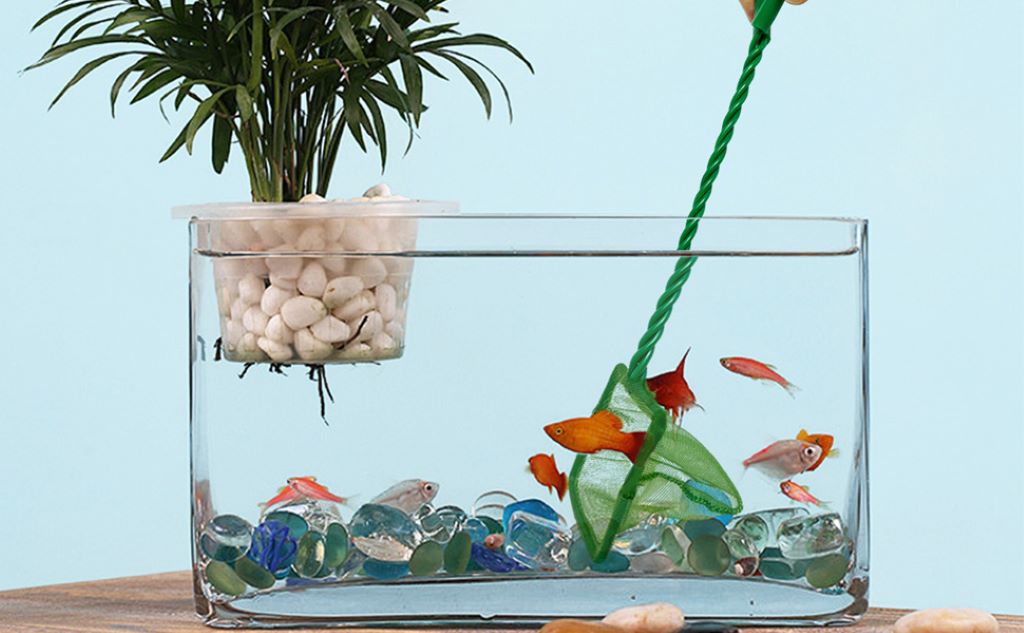
Move slowly and calmly when approaching your fish. Sudden movements can startle them and make them harder to catch. Use the net to gently guide the fish into a corner before scooping them up.
3. Scoop Gently
When scooping fish, move the net slowly and avoid trapping them against the sides or bottom of the tank. Lift the net smoothly to prevent stress or injury.
4. Support the Fish
Once the fish is in the net, support its body with your free hand or the net’s mesh. Avoid squeezing or pressing too hard, as this can cause injury or stress.
5. Release Fish Carefully
When releasing fish back into the tank, lower the net gently into the water and allow the fish to swim out on its own. Avoid dropping or shaking the net, as this can cause panic or injury.
6. Clean and Store the Net
After each use, rinse the net under warm water to remove debris. Allow it to air dry before storing it in a clean, dry place. Avoid leaving the net in direct sunlight or near heat sources, as this can degrade the mesh.
Common Mistakes to Avoid
1. Using the Wrong Size Net
A net that’s too small or too large for your fish can cause stress or injury. Always choose a net that matches the size of your fish and tank.
2. Chasing Fish Aggressively
Chasing fish with the net can cause panic and stress. Instead, guide them gently into a corner before scooping them up.
3. Using a Damaged Net
A net with tears, frayed edges, or a broken handle can harm your fish or make handling difficult. Inspect your net regularly and replace it if it shows signs of wear.
4. Skipping Net Maintenance
A dirty or contaminated net can introduce harmful bacteria or chemicals into your tank. Always rinse and disinfect your net after each use.
5. Ignoring Fish Behavior
Some fish are more sensitive to handling than others. Pay attention to your fish’s behavior and adjust your approach accordingly. If a fish seems stressed, give it time to calm down before attempting to handle it again.
FAQs About Aquarium Nets
How often should I replace my aquarium net?
Replace your net if it becomes frayed, torn, or difficult to clean. With proper care, a quality net can last for years.
Can I use a household net for my aquarium?
No, household nets are often made from rough materials that can harm fish. Always use a net designed specifically for aquariums.
How do I disinfect my aquarium net?
Soak the net in a mild bleach solution (1 part bleach to 20 parts water) for 10 minutes, then rinse thoroughly under warm water. Allow it to air dry before using it again.
What’s the best net for betta fish?
A fine-mesh net with a small, shallow bag is ideal for betta fish. Avoid nets with rough or stiff mesh that can damage their delicate fins.
Can I use the same net for multiple tanks?
Yes, but disinfect the net between uses to prevent the spread of diseases or parasites. Rinse it thoroughly and soak it in a mild bleach solution if needed.
Conclusion
Choosing the right aquarium net is essential for safe, stress-free fish handling. By selecting a net that matches your fish’s size, your tank’s dimensions, and your specific needs, you can make maintenance, transfers, and treatments easier and safer for everyone involved.
A good aquarium net is a small investment that makes a big difference in the health and happiness of your aquatic pets. Share your favorite fish handling tips or ask questions in the comments below—let’s help each other create the best possible environment for our fish!