How to Use Aquarium Glue Safely for Plants and Decorations
Creating a stunning aquascape is about more than just choosing the right plants and decorations. It’s also about how you arrange them. Whether you’re attaching moss to driftwood, securing plants to rocks, or fixing ornaments in place, aquarium glue is an essential tool for achieving a natural, long-lasting setup.
However, not all glues are safe for aquatic environments. Using the wrong product can harm your fish, plants, and the delicate balance of your tank. Knowing how to choose and use aquarium glue safely ensures your aquarium stays healthy and beautiful.
If you’re looking for the best aquarium glue to bring your aquascape to life, this guide will walk you through everything you need to know.
Why Use Aquarium Glue?
Aquarium glue is specially formulated to be safe for underwater use. Unlike regular household adhesives, it doesn’t contain toxic chemicals that can leach into the water and harm your aquatic life. Aquarium glue is typically made from cyanoacrylate (super glue) or silicone, both of which are non-toxic once cured.
Using aquarium glue offers several benefits:
- Secure Attachments: Glue helps anchor plants and decorations in place, preventing them from floating away or shifting.
- Natural Look: You can create realistic arrangements, like moss-covered rocks or plants growing on driftwood, without visible ties or weights.
- Long-Lasting Hold: A good aquarium glue forms a strong bond that withstands water movement and the test of time.
- Versatility: It works on a variety of materials, including live plants, driftwood, rocks, and ornaments.
I first discovered the power of aquarium glue when I tried to attach Java fern to a piece of driftwood. No matter how I tied it, the plant kept coming loose. After using a small amount of cyanoacrylate glue, the fern stayed put and grew beautifully. Since then, aquarium glue has become a staple in my aquascaping toolkit.
Types of Aquarium Glue
1. Cyanoacrylate Glue (Super Glue)
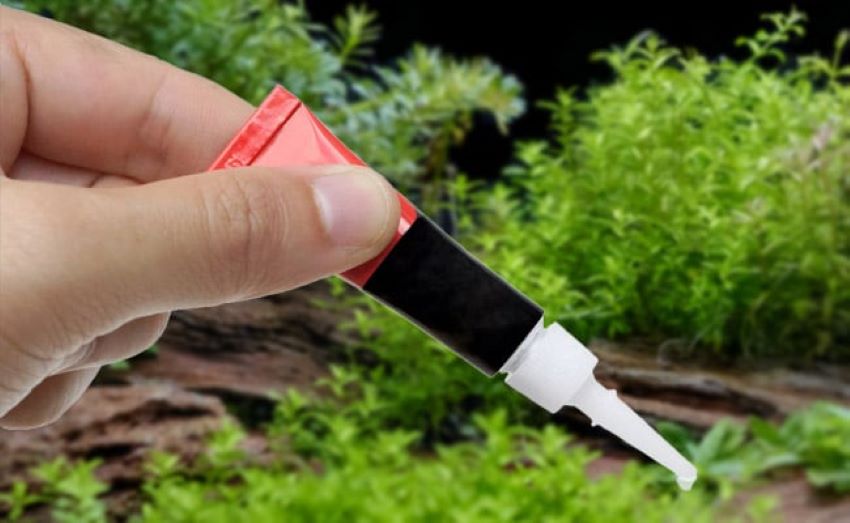
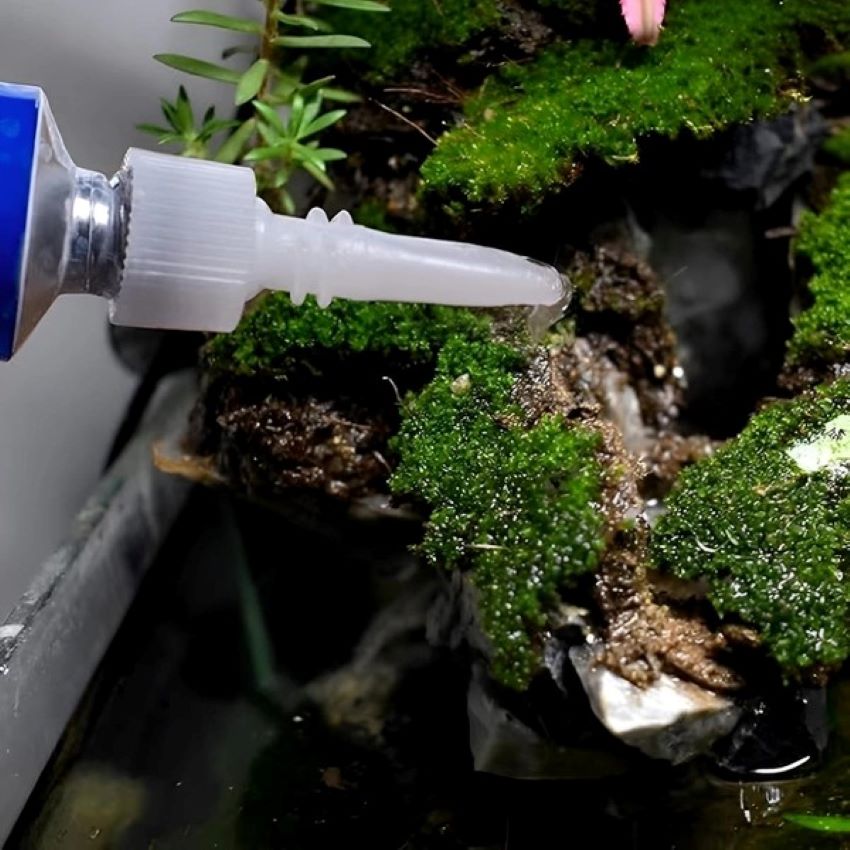
Cyanoacrylate glue, commonly known as super glue, is the most popular choice for aquascaping. It’s fast-drying, forms a strong bond, and is safe for aquatic use once fully cured. Cyanoacrylate glue is ideal for attaching plants to rocks, driftwood, and other decorations.
- Best for: Attaching moss, ferns, and small plants to hard surfaces like driftwood or rocks.
- Brands to try: Seachem Glue, Loctite Gel Control, or Gorilla Super Glue Gel.
Note: Always use 100% cyanoacrylate glue without additives. Avoid industrial or household super glues, which may contain harmful chemicals.
2. Silicone Adhesive
Silicone adhesive is another safe option for aquariums. It’s flexible, waterproof, and non-toxic once cured. Silicone is often used for larger projects, such as sealing decorations or attaching heavy ornaments.
- Best for: Securing larger decorations, sealing gaps, or attaching heavy items like rocks or caves.
- Brands to try: GE Silicone I, Aquarium Silicone Sealant, or Aqueon Silicone.
Note: Use only 100% silicone labeled as aquarium-safe. Avoid silicone with mold inhibitors or other additives.
3. Epoxy Putty
Epoxy putty is a two-part adhesive that hardens underwater, making it useful for repairs and attaching decorations. It’s non-toxic once cured and can be molded to fit various shapes.
- Best for: Repairing broken decorations, attaching large rocks, or creating custom structures.
- Brands to try: Milliput Epoxy Putty or Aquarium Epoxy.
Note: Follow the manufacturer’s instructions for mixing and curing times.
How to Choose the Right Glue for Your Project
1. Consider the Material
Different glues work best on different materials. Here’s a quick guide:
- Plants to Rocks/Driftwood: Cyanoacrylate glue is ideal for attaching moss, ferns, and small plants to hard surfaces.
- Large Decorations: Silicone adhesive or epoxy putty is better for securing heavy ornaments or sealing gaps.
- Repairs: Epoxy putty is perfect for fixing broken decorations or creating custom structures.
2. Think About Curing Time
Cyanoacrylate glue cures almost instantly, making it great for quick fixes. Silicone and epoxy putty take longer to set—anywhere from a few hours to 24 hours—so plan accordingly.
3. Check for Aquarium Safety
Always verify that the glue is labeled as aquarium-safe. Avoid products with additives, mold inhibitors, or unknown chemicals. When in doubt, stick to trusted brands like Seachem, Loctite, or GE Silicone.
4. Evaluate Strength and Flexibility
Cyanoacrylate glue forms a rigid bond, which is excellent for permanent attachments. Silicone and epoxy putty offer more flexibility, making them better for items that may shift or expand over time.
Step-by-Step Guide to Using Aquarium Glue Safely
1. Prepare Your Materials
Before gluing, clean the surfaces you’ll be attaching. Remove any dirt, algae, or debris to ensure a strong bond. For live plants, trim any damaged leaves or roots.
2. Work Outside the Tank
Always apply glue outside the aquarium to avoid accidental spills or contamination. Place your decorations or plants on a clean, dry surface.
3. Apply the Glue
- Cyanoacrylate Glue: Apply a small drop to the surface where you want to attach the plant or decoration. Press the plant or decoration firmly in place and hold for 10–30 seconds.
- Silicone Adhesive: Apply a thin bead of silicone to the surface. Press the decoration or plant into place and allow it to cure for at least 24 hours before submerging.
- Epoxy Putty: Mix the putty according to the instructions, then mold it around the items you’re attaching. Allow it to cure fully before placing it in the tank.
4. Let It Cure Fully
Cyanoacrylate glue cures almost instantly, but silicone and epoxy putty need time to set. Follow the manufacturer’s instructions for curing times, and avoid submerging the glued items until fully cured.
5. Rinse Before Submerging
After the glue has cured, rinse the attached items under running water to remove any residue. This step ensures no uncured glue or chemicals enter your aquarium.
6. Introduce to the Tank Gradually
Once the glue is fully cured and rinsed, place the items in your aquarium. Monitor your fish and plants for the first 24 hours to ensure there’s no adverse reaction.
Safety Tips for Using Aquarium Glue
1. Avoid Overusing Glue
Use the smallest amount of glue necessary to secure your plants or decorations. Excess glue can leach into the water or create an unsightly mess.
2. Work in a Well-Ventilated Area
Cyanoacrylate glue fumes can be irritating. Work in a well-ventilated space to avoid inhaling fumes, and avoid touching your eyes or mouth while handling glue.
3. Keep Glue Away from Fish and Plants
Never apply glue directly in the aquarium. Always attach plants or decorations outside the tank and rinse them thoroughly before submerging.
4. Store Glue Properly
Keep your aquarium glue in a cool, dry place, away from direct sunlight. Seal the container tightly to prevent the glue from drying out or becoming contaminated.
5. Test on a Small Scale First
If you’re trying a new glue or technique, test it on a small, non-critical item first. Monitor the item in a separate container of water for 24 hours to ensure it’s safe before adding it to your main tank.
Common Mistakes to Avoid
1. Using the Wrong Glue
Household glues, like regular super glue or craft glue, often contain additives that are toxic to aquatic life. Always use glues labeled as aquarium-safe.
2. Not Letting Glue Cure Fully
Rushing the curing process can lead to uncured glue leaching into the water. Follow the manufacturer’s recommended curing time before submerging glued items.
3. Applying Too Much Glue
Excess glue can create a mess and may harm your aquarium’s inhabitants. Use only the amount needed to secure your plants or decorations.
4. Skipping the Rinse Step
Rinsing glued items removes any residual chemicals or uncured glue, ensuring your aquarium stays safe. Never skip this step.
5. Ignoring Plant Health
Avoid gluing unhealthy or dying plants. Focus on attaching thriving plants that will benefit from being secured in place.
FAQs About Aquarium Glue
Is aquarium glue safe for fish and plants?
Yes, aquarium glue is safe for fish and plants once fully cured. Always use glues labeled as aquarium-safe and follow the manufacturer’s instructions.
How long does aquarium glue take to cure?
Cyanoacrylate glue cures almost instantly, while silicone and epoxy putty can take anywhere from a few hours to 24 hours. Always check the product’s instructions for specific curing times.
Can I use super glue in my aquarium?
Yes, but only if it’s 100% cyanoacrylate without additives. Brands like Seachem Glue or Loctite Gel Control are safe for aquariums.
How do I remove aquarium glue?
Cyanoacrylate glue can be difficult to remove once cured. For silicone or epoxy, use a razor blade or plastic scraper to gently peel it away. Avoid using harsh chemicals in your aquarium.
Can I glue live plants to rocks or driftwood?
Yes, cyanoacrylate glue is safe for attaching live plants to rocks or driftwood. Apply a small amount to the rock or driftwood, press the plant into place, and hold for 10–30 seconds.
Conclusion
Using aquarium glue safely is the key to creating stunning, long-lasting aquascapes. By choosing the right type of glue, following proper application techniques, and prioritizing safety, you can secure your plants and decorations with confidence.
Whether you’re attaching moss to driftwood, securing a new ornament, or repairing a broken decoration, aquarium glue is a versatile and essential tool. Share your favorite aquascaping tips or ask questions in the comments below—let’s help each other build beautiful, thriving aquariums!