How to Pick the Best Reef Aquarium Skimmer for Crystal Clear Water
Maintaining a thriving reef aquarium demands more than just beautiful corals and fish. You need a high-quality reef aquarium skimmer to keep your water pristine. A protein skimmer actively removes organic waste, excess nutrients, and pollutants before they break down into harmful substances like nitrates and phosphates. This process keeps your water crystal clear and promotes the health of your corals and fish. With so many options available, selecting the right skimmer can feel overwhelming. This guide will help you understand how to choose the best skimmer for your reef aquarium.
Why Your Reef Aquarium Needs a Skimmer
A reef aquarium skimmer plays a vital role in any saltwater setup. It creates tiny bubbles that attract and remove organic waste, proteins, and other pollutants from the water. This process, called foam fractionation, maintains low nutrient levels, which are crucial for coral health and water clarity. Recent market data shows that 86% of marine tanks larger than 30 gallons use protein skimmers, proving their importance in the hobby. Without a skimmer, organic waste can build up, leading to poor water quality, algae blooms, and stressed aquatic life.
How Protein Skimmers Work
Protein skimmers inject air into a column of water, creating foam that rises to the top. Organic waste and proteins stick to the bubbles, forming a thick foam that collects in a cup. The system then removes this foam, or “skimmate,” from the aquarium, effectively exporting waste before it decomposes and releases harmful nutrients. The skimmer’s efficiency depends on factors like bubble size, water flow, and design. Needle wheel skimmers, for example, produce fine bubbles that maximize waste removal.
Key Factors to Consider When Choosing a Skimmer
Match the Skimmer to Your Tank Size and Bioload
The size of your tank and its bioload (the amount of waste your fish and corals produce) are the most important factors in selecting a skimmer. As a rule, pick a skimmer rated for a tank slightly larger than your own. For instance, if you have a 75-gallon tank, choose a skimmer designed for 100 gallons. This ensures the skimmer can handle the waste, especially if your tank is heavily stocked.
Choose Between In-Sump and Hang-On-Back (HOB) Skimmers
Skimmer types vary based on installation location. In-sump skimmers fit inside your sump and work best for larger setups with dedicated filtration space. They tend to perform more efficiently and quietly than HOB skimmers, which hang on the back of the tank. HOB skimmers are ideal for smaller tanks or all-in-one systems where space is limited. However, they may not be as powerful as in-sump models and can sometimes look less appealing.
Focus on Flow Rate and Bubble Production
The flow rate of a skimmer determines how much water it processes per hour. A higher flow rate usually means better waste removal, but you must match it to your tank’s needs. For most reef tanks, a skimmer with a flow rate of 3 to 4 times your tank’s volume per hour works best. Additionally, bubble production matters. Needle wheel skimmers create fine bubbles that effectively remove waste, while venturi skimmers may produce larger, less efficient bubbles.
Prioritize Ease of Maintenance and Adjustability
A good skimmer should be easy to clean and adjust. Look for models with removable collection cups and simple mechanisms for adjusting foam levels. Some skimmers even feature self-cleaning systems or automatic waste removal, saving you time and effort. Regular maintenance, like cleaning the collection cup and checking the pump, keeps your skimmer running efficiently.
Personal Experience: The Impact of a Quality Skimmer
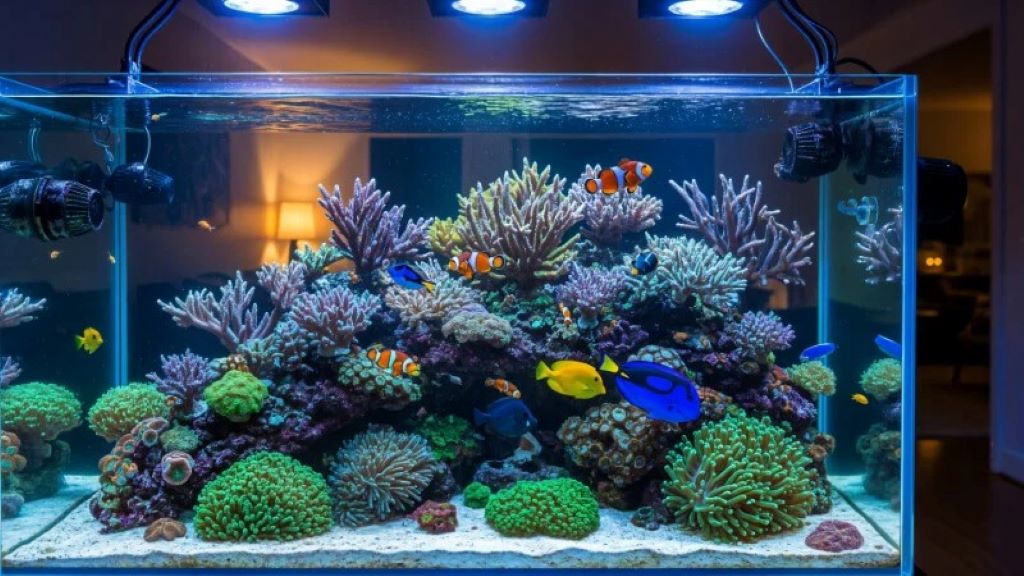
When I first set up my 125-gallon reef tank, I didn’t realize how important a quality skimmer was. I started with a budget model that couldn’t keep up with the waste my fish and corals produced. Within weeks, algae increased, and water clarity declined. After upgrading to a high-performance needle wheel skimmer, the difference was dramatic. The water became noticeably clearer, and my corals showed better color and growth. This experience taught me the value of investing in a reliable skimmer from the beginning.
Top Reef Aquarium Skimmer Recommendations
Best for Nano Tanks
For nano tanks (under 40 gallons), compact skimmers like the Eshopps In-Sump Nano Protein Skimmer are excellent choices. These skimmers fit in tight spaces and provide efficient waste removal without taking up too much room. Look for models with magnetic mounts or slim profiles for easy installation in all-in-one systems.
Best for Mid-Sized Tanks
Mid-sized tanks (50 to 100 gallons) benefit from skimmers like the Reef Octopus Classic series. These skimmers balance performance and affordability, offering features like needle wheel pumps and adjustable foam levels. They are also durable and easy to maintain.
Best for Large Tanks
For large tanks (over 100 gallons), high-capacity skimmers like the AquaMaxx ConeS series are ideal. These skimmers handle heavy bioloads and provide superior waste removal. They often include advanced features like self-cleaning systems and quiet operation, making them a top choice for serious reef keepers.
Common Mistakes to Avoid When Using a Skimmer
Avoid Choosing the Wrong Size
One of the most common mistakes is selecting a skimmer that is too small for the tank. An undersized skimmer will struggle to keep up with waste production, leading to poor water quality. Always choose a skimmer rated for a tank size larger than your own.
Place Your Skimmer Correctly
Placing your skimmer in the wrong location reduces its effectiveness. Install in-sump skimmers in the first chamber of the sump, where water flow is highest. Position HOB skimmers to maximize water circulation. Avoid placing the skimmer near sources of turbulence, as this can disrupt bubble formation.
Maintain Your Skimmer Regularly
Regular maintenance is crucial for keeping your skimmer running efficiently. Failing to clean the collection cup or check the pump can lead to reduced performance and even equipment failure. Set a schedule for cleaning and inspecting your skimmer to ensure it continues to operate at its best.
FAQs About Reef Aquarium Skimmers
Do I need a protein skimmer for my reef tank?
Yes, we highly recommend a protein skimmer for reef tanks. It helps maintain low nutrient levels, which are essential for coral health and water clarity. The only exception is low-nutrient reef tanks, which are specifically designed to operate with minimal nutrients.
How often should I clean my skimmer?
Clean your skimmer’s collection cup every 2 to 3 days, or as needed based on the amount of waste collected. Regular cleaning ensures the skimmer continues to remove waste effectively.
Can a skimmer remove all the waste from my tank?
While a skimmer is highly effective at removing organic waste, you should use it alongside other filtration methods, such as mechanical and biological filtration, for optimal water quality.
What is the difference between a needle wheel and venturi skimmer?
Needle wheel skimmers use a specialized impeller to create fine bubbles, which are more effective at removing waste. Venturi skimmers use a venturi valve to inject air into the water, producing larger bubbles that are less efficient.
How do I know if my skimmer is working properly?
A properly functioning skimmer will produce a steady stream of dark, smelly foam in the collection cup. If the foam is light or minimal, the skimmer may need adjustment or maintenance.
Conclusion
Choosing the right reef aquarium skimmer is a critical step in maintaining a healthy and beautiful reef tank. By considering factors like tank size, skimmer type, flow rate, and ease of maintenance, you can select a skimmer that meets your needs and keeps your water crystal clear. Remember, a quality skimmer is an investment in the long-term success of your aquarium, ensuring your corals and fish thrive in a clean and stable environment.
Call to Action: Have you found a skimmer that works perfectly for your reef tank? Share your experiences or ask questions in the comments below! Don’t forget to share this article with fellow reef keepers who might find it helpful.