

Cloudy Aquarium Water? 7 Quick Cloudy Water Causes and Solutions
Few things frustrate aquarium hobbyists more than cloudy water. You’ve put in the time, picked the perfect fish, and suddenly your tank looks like murky soup. Fortunately, cloudy water is a common problem with straightforward solutions. Whether you’re a seasoned aquarist or a beginner, understanding the root causes can help you fix the issue and prevent it in the future.
Let’s dive into the seven most common reasons your aquarium water turns cloudy—and what you can do to solve each one.
-
Bacterial Bloom After Cycling
The most common reason for cloudy aquarium water, especially in new tanks, is a bacterial bloom. When a new tank is cycling, beneficial bacteria begin to colonize and break down ammonia. This process often leads to a temporary haze.
According to FishLab.com, this bloom is part of the natural nitrogen cycle and usually clears up on its own in a few days. However, adding too many fish at once or overfeeding can make it worse. This surge in organic waste leads to an explosion of heterotrophic bacteria.
Solution:
Be patient. Don’t change the water aggressively, as this disrupts the balance. Instead, perform small water changes (10-15%) every few days. Avoid adding more fish until the water clears and test ammonia and nitrite levels regularly.
-
Overfeeding
Overfeeding your fish is a guaranteed path to cloudy water. Uneaten food decomposes quickly, releasing ammonia and fueling bacterial overgrowth.
In a 2023 survey by The Spruce Pets, over 45% of beginner aquarists admitted to feeding their fish more than needed. The excess food contributes to murky water and unhealthy tank conditions.
Solution:
Feed small amounts once or twice daily—just what your fish can consume in under two minutes. Remove any leftover food promptly. Use automatic feeders if you’re away to avoid human error.
-
Unwashed Substrate
New gravel or sand often contains dust and particles that cloud your water if not thoroughly rinsed. This is a frequent mistake among first-time tank owners.
Even high-end substrates like CaribSea or Eco-Complete can release fine sediment when not rinsed properly. Left unchecked, this cloudiness can last for days.
Solution:
Always rinse substrate thoroughly before adding it to the tank. Use a large sieve or colander under running water and agitate until the runoff runs clear. If your water is already cloudy, use a water clarifier or fine mechanical filtration to speed up the cleanup.
-
Poor Filtration or Clogged Filters
Filters are your tank’s life support. A weak or clogged filter struggles to remove debris and particulate matter, leading to hazy water.
Underpowered filters often can’t handle tanks above their rated capacity. According to Aquarium Co-Op, you should use filters rated for at least twice your tank size for optimal results.
Solution:
Clean your filters monthly but avoid using tap water, as it kills beneficial bacteria. Replace or rinse media with tank water. Upgrade to a more powerful filter if needed, and consider adding a sponge pre-filter for extra mechanical filtration.
-
Algae Bloom (Green Water)
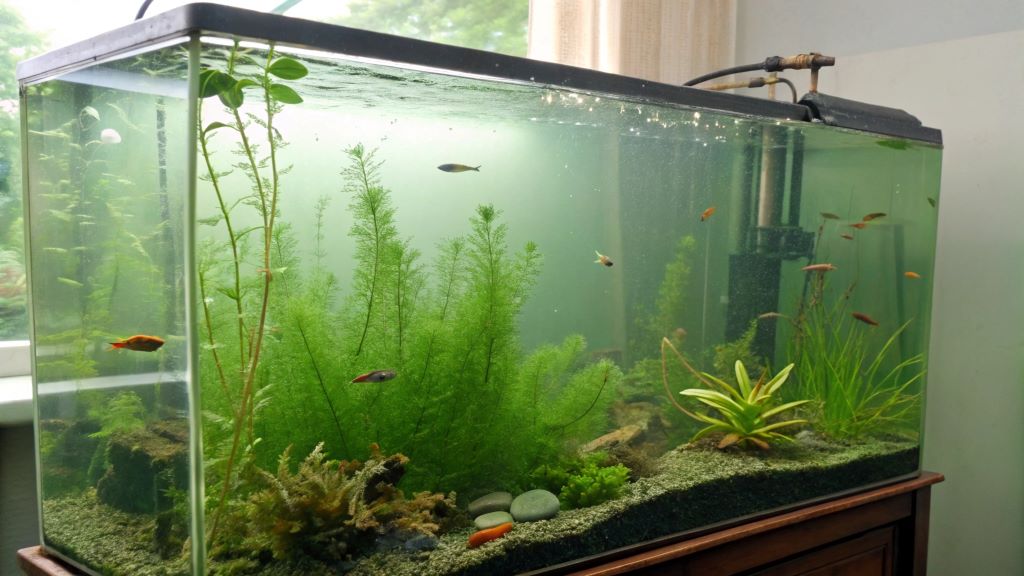
If your tank water is green and cloudy, it’s likely due to free-floating algae. This explosion is usually caused by excessive lighting and high nutrient levels.
Leaving the aquarium light on for over 10 hours or placing the tank near a window can trigger rapid algal growth. The algae feed on nitrates and phosphates, especially if you overfeed or don’t clean the tank regularly.
Solution:
Cut back on lighting to 6–8 hours daily. Perform regular water changes and consider using a UV sterilizer, which effectively kills free-floating algae. Live plants can also outcompete algae for nutrients.
-
Too Many Fish (Overstocking)
An overcrowded tank throws the ecosystem out of balance. More fish means more waste, which in turn means more bacteria and cloudy water.
A common rule is one inch of fish per gallon, but this can vary depending on the species. Goldfish, for instance, produce significantly more waste than tetras.
Solution:
Evaluate your tank’s bio-load. Reduce fish numbers or upgrade to a larger aquarium. Enhance biological filtration and increase water changes to accommodate extra waste.
-
Tap Water Contaminants
Sometimes, it’s not your tank—it’s your tap. Tap water often contains minerals, chlorine, and other compounds that cause haziness.
Hard water is a major culprit. When minerals like calcium and magnesium precipitate, they cause white, cloudy water, especially in high-pH environments.
Solution:
Use a water conditioner like Seachem Prime before adding tap water. Test your water hardness and consider using RO (reverse osmosis) water for sensitive setups. Let the water sit for 24 hours before use, if possible.
Featured Snippet:
Why Is My Fish Tank Water Cloudy Even After a Water Change?
Cloudy water after a water change often points to a disruption in your tank’s beneficial bacteria. When you perform large water changes, you may inadvertently remove too many bacteria that help process waste. Additionally, stirring up debris in the substrate or overcleaning the filter can release trapped particles and organics, making the water appear cloudy. Tap water additives, like chloramines, also contribute to the problem if not neutralized properly.
Frequently Asked Questions (FAQs)
- How long does bacterial bloom last in a new aquarium?
Typically, it clears in 3–7 days. Avoid overreacting, as it resolves on its own if left undisturbed. - Can cloudy water harm my fish?
Yes, if caused by poor water quality or ammonia spikes. Always test parameters to ensure safety. - Should I do daily water changes to fix cloudy water?
No. Frequent large water changes disrupt beneficial bacteria. Stick to small, regular changes. - Do water clarifiers work for cloudy water?
They can offer temporary relief, especially for fine particles, but they don’t solve underlying issues. - Is green water different from cloudy water?
Yes. Green water is algae-based; cloudy water often results from bacteria or debris. - Why is my tank cloudy after adding new decorations?
Unwashed ornaments can release dust and residue. Always rinse new items thoroughly before use. - How do I prevent cloudy water in the future?
Maintain consistent water changes, avoid overfeeding, and use a quality filter.
Final Thought
Cloudy aquarium water can be a frustrating sight, but it’s rarely unsolvable. By understanding the seven primary causes—ranging from bacterial blooms to overfeeding—you can take effective steps to fix the issue. More importantly, you’ll prevent it from recurring.
Aquarium care is as much about balance as it is about beauty. Invest in reliable filtration, monitor your water quality regularly, and resist the urge to overcrowd your tank. When the ecosystem inside your aquarium thrives, crystal-clear water is just a natural result.
Sources and References:
Read More:
Aquarium Plants And Aquascaping: Design Tips And Plant Care
Choosing Compatible Tank Mates And Invertebrates for Your Aquarium