How to Set Up Tetra 1.1 Gallon Betta Aquarium Kit
Setting up the Tetra 1.1 Gallon Betta Aquarium Kit takes only a few careful steps. First, position the tank securely, rinse the equipment, condition the water, and install the LED correctly. The aquarium holds 1.1 gallons and measures about 10.5 inches high by 9 inches wide. Its movable LED uses three AA batteries or compatible USB power. The Tetra 1.1 Gallon Betta Aquarium Kit suits compact desktop spaces and beginner setups. However, its small volume requires disciplined maintenance and careful stocking decisions. This guide explains setup, water preparation, lighting, acclimation, maintenance, and common mistakes.
Key Takeaways:
- Place the aquarium on a stable, level surface before adding water.
- Rinse new gravel and decorations with plain water before installation.
- Always treat tap water with an appropriate aquarium water conditioner.
- The included LED can sit above or below the curved aquarium.
- Do not add a betta until the water reaches a safe condition.
- A 1.1-gallon aquarium needs closer monitoring than larger aquariums.
- Plan regular partial water changes instead of relying on appearance alone.
What Comes With the Tetra Half Moon Aquarium?
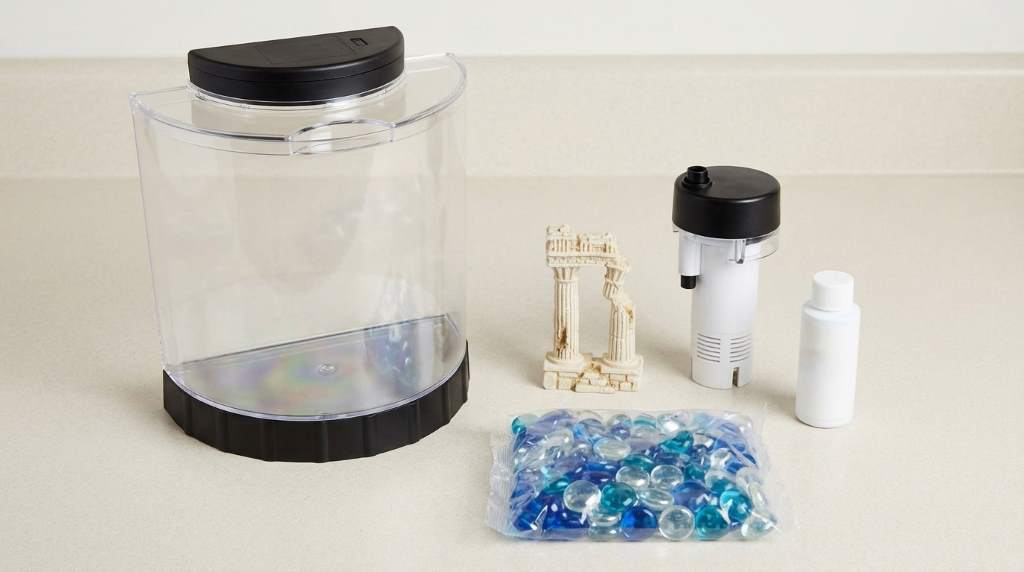
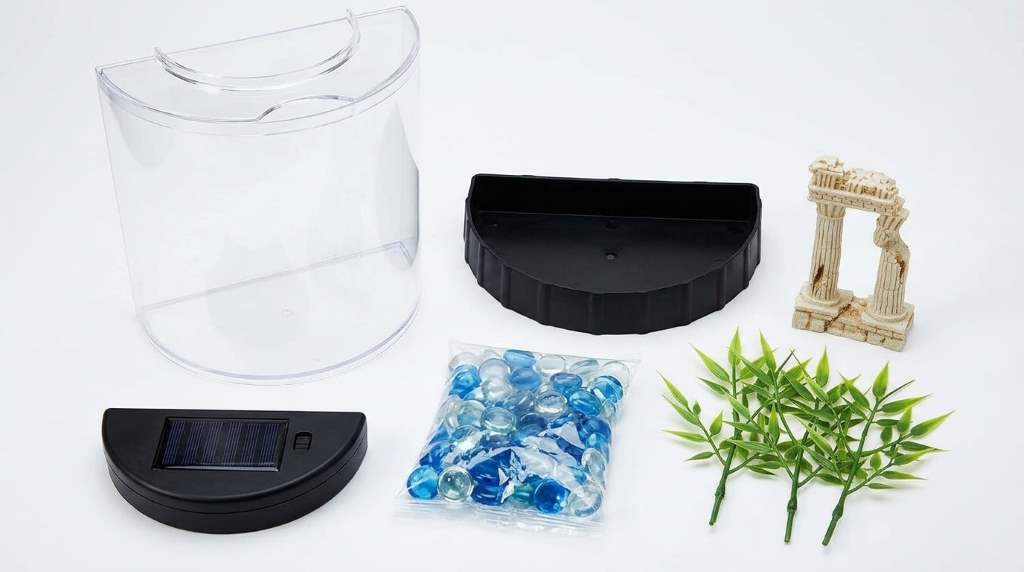
Before setup, inspect every component and confirm nothing arrived cracked or damaged. The kit centers around a clear, half-moon aquarium with a transparent canopy and movable LED lighting.
The canopy includes a convenient feeding opening for routine feeding. The LED can illuminate the aquarium from above or create an underglow beneath the tank.
However, do not assume the kit provides everything required for complete betta care. Gravel, plants, decorations, fish, and several essential care items require separate preparation.
Equipment You Should Prepare
Gather your supplies before filling the aquarium to prevent unnecessary interruptions. Keeping everything nearby also reduces rushed decisions during the initial setup.
- Clean aquarium gravel or another betta-safe substrate
- Aquarium-safe decorations or silk plants
- Water conditioner designed for freshwater aquariums
- Dedicated aquarium thermometer
- Small aquarium heater when conditions require heating
- Small siphon or gravel vacuum
- Clean bucket reserved exclusively for aquarium use
- Water testing supplies for ammonia, nitrite, nitrate, and pH
Choose the Right Location First
Location affects temperature, algae growth, stability, and everyday maintenance. Therefore, choose the aquarium location before adding substrate or water.
Place the tank on a sturdy, level surface that can safely support its filled weight. Avoid unstable shelves, narrow ledges, direct sunlight, and locations beside heating or cooling vents.
Keep the aquarium away from frequent vibrations and heavy household traffic. A calm location can make feeding, observation, and routine maintenance easier.
Check the Surface Before Filling
Clean the surface and remove grit that could affect stability. Then place the empty aquarium carefully and confirm that it sits evenly.
Never move the aquarium after filling it. Water adds substantial weight, while shifting a filled tank can stress the plastic structure.
Clean the Tank and Accessories
Rinse the aquarium, substrate, plants, and decorations before assembling everything. Use clean water only, because household soaps can leave harmful residues.
Rinse gravel repeatedly until the water becomes reasonably clear. Similarly, wipe the aquarium gently with a clean, soft cloth.
Do not scrub the plastic aggressively because scratches can develop easily. Avoid abrasive pads that can permanently reduce viewing clarity.
Build the Interior Layout
Add the substrate first, creating a shallow and even foundation across the bottom. A modest substrate layer leaves more usable swimming space.
Next, position decorations and plants without overcrowding the curved interior. Leave open swimming space across the front and center.
Choose smooth decorations without sharp edges, rough seams, or exposed points. Bettas have delicate fins that can catch against unsuitable ornaments.
Create a Simple Betta-Friendly Arrangement
- Keep taller plants toward the rear portion of the aquarium.
- Leave the center relatively open for swimming.
- Provide gentle cover near the sides or rear.
- Avoid filling the entire floor with heavy decorations.
- Keep every ornament stable enough to resist accidental movement.
Prepare and Condition the Water
Fill a clean bucket with tap water at approximately the aquarium’s intended temperature. Never pour untreated tap water directly into the aquarium for a betta.
Tap water can contain chlorine, chloramine, and other substances harmful to aquatic animals. Therefore, dose a suitable water conditioner according to its label directions.
Measure conditioner carefully because a small aquarium leaves little room for dosing errors. Follow the product’s actual dosage instructions rather than guessing from the tank’s appearance.
Match the Water Temperature
Bettas generally need warm, stable water rather than sudden temperature changes. Use a reliable thermometer to check the aquarium temperature regularly.
If your room remains too cool, use a properly rated aquarium heater designed for small tanks. Always follow the heater manufacturer’s water-depth and placement instructions.
Never plug electrical aquarium equipment into an outlet before following its safety instructions. Create a drip loop on electrical cords whenever applicable.
Install the Movable LED Light
The Tetra kit uses a repositionable LED that offers two practical lighting positions. You can place it above the aquarium for conventional illumination.
Alternatively, position the light underneath the aquarium for a distinctive illuminated effect. Keep the lighting schedule consistent instead of leaving the light running continuously.
Use three AA batteries when operating the battery-powered configuration. The compatible USB power option can reduce battery replacement when your setup supports it.
Use a Sensible Lighting Schedule
Bettas need periods of darkness as well as light. Therefore, avoid keeping aquarium lighting on throughout the entire day.
A consistent daytime lighting period helps establish a predictable routine. Reduce lighting duration if algae begins appearing rapidly on the aquarium surfaces.
Understand Filtration and Water Quality
One commonly overlooked point involves filtration. This compact kit does not provide the same filtration capacity as larger aquarium systems.
Therefore, owners must pay closer attention to waste accumulation and water quality. A small aquarium can experience rapid parameter changes after feeding or overstocking.
Test ammonia and nitrite regularly, especially during the initial setup period. Any detectable ammonia or nitrite deserves immediate attention and corrective action.
Why Cycling Matters
Biological cycling establishes beneficial bacteria that process toxic nitrogen compounds. Without established biological filtration, fish waste can quickly compromise water quality.
Use a suitable cycling method rather than assuming clear water means safe water. Water can look perfectly clean while containing dangerous ammonia or nitrite.
For a new aquarium, consider fishless cycling whenever practical. This approach allows beneficial bacteria to establish before introducing the betta.
Fill the Aquarium Without Creating a Mess
Pour conditioned water slowly over a clean dish or similar surface. This method prevents strong water flow from disturbing gravel and decorations.
Leave appropriate space beneath the canopy instead of filling the aquarium to the absolute rim. The feeding opening also needs to remain accessible.
After filling, inspect the tank from several angles for leaks or unusual movement. Then confirm that every decoration remains stable.
Introduce Your Betta Carefully
Never rush fish acclimation simply because the aquarium looks ready. Your betta needs time to adjust to differences in temperature and water chemistry.
Float the transport container according to an appropriate acclimation method. Gradually introduce aquarium water while allowing the fish to adjust.
Keep the lighting subdued during introduction to reduce unnecessary stimulation. Avoid feeding heavily during the first several hours.
Watch for Normal Adjustment
A newly introduced betta may hide, rest, or explore cautiously. Give the fish time instead of repeatedly disturbing the aquarium.
Watch breathing, swimming, posture, appetite, and fin condition during the first few days. Sudden lethargy, persistent surface distress, or unusual behavior requires investigation.
Maintain a 1.1-Gallon Aquarium Properly
The biggest challenge with this aquarium size involves water stability. Smaller water volumes can accumulate waste faster and change temperature more quickly.
Therefore, maintenance must become part of your routine rather than an occasional task. Test water parameters and perform appropriate partial water changes when necessary.
Use conditioned replacement water with a similar temperature. Avoid replacing all the water unless a specific emergency requires it.
Simple Maintenance Routine
- Check temperature and fish behavior daily.
- Remove uneaten food promptly.
- Inspect water clarity and surface condition regularly.
- Test ammonia and nitrite during new-tank cycling.
- Check nitrate periodically after the aquarium establishes.
- Perform partial water changes according to test results.
- Clean algae gently without scratching the acrylic.
Feeding Without Polluting the Tank
Overfeeding creates one of the fastest routes to poor water quality. Give your betta small portions that it can consume promptly.
Start conservatively and observe how much food disappears. Remove uneaten food instead of allowing it to decompose inside the aquarium.
Because this aquarium holds only 1.1 gallons, small amounts of waste matter more. Consistent feeding habits therefore protect water quality and reduce maintenance problems.
Common Setup Mistakes to Avoid
Many beginner guides focus on assembling the tank but overlook what happens afterward. The following mistakes can undermine an otherwise careful setup.
- Skipping water conditioner: Untreated tap water can expose fish to harmful disinfectants.
- Adding fish immediately: A new aquarium may lack established biological filtration.
- Overfeeding: Excess food decomposes and increases the aquarium’s waste burden.
- Overcrowding: A 1.1-gallon aquarium offers very limited biological capacity.
- Ignoring temperature: Small volumes can experience noticeable temperature changes.
- Using sharp décor: Rough surfaces can damage delicate betta fins.
- Cleaning with soap: Chemical residue can remain dangerous even after rinsing.
- Skipping water tests: Clear water does not guarantee safe water chemistry.
Is 1.1 Gallons Enough for a Betta?
The aquarium can physically hold a single betta, but its small volume creates significant care limitations. A larger aquarium generally provides greater water stability, swimming space, and equipment flexibility.
For long-term husbandry, many experienced keepers prefer substantially larger aquariums. A five-gallon aquarium offers considerably more room for stable water conditions and useful equipment.
Therefore, treat this compact aquarium as a high-maintenance setup rather than a maintenance-free bowl. If you already own this kit, careful monitoring becomes especially important.
A Better Setup Strategy for Beginners
Start with the environment rather than the fish. Prepare the aquarium, condition the water, establish biological filtration, and verify temperature first.
Next, create a simple layout with safe décor and adequate open swimming space. Finally, introduce one betta only after the environment meets appropriate conditions.
This sequence reduces avoidable stress and gives you time to identify equipment problems. It also creates a repeatable routine for future aquarium maintenance.
Quick Setup Checklist
| Step | What to Do |
|---|---|
| 1 | Choose a stable, level location. |
| 2 | Inspect the aquarium for damage. |
| 3 | Rinse substrate and decorations with clean water. |
| 4 | Add a modest substrate layer and safe décor. |
| 5 | Prepare temperature-appropriate tap water. |
| 6 | Add water conditioner according to its label. |
| 7 | Fill the aquarium carefully. |
| 8 | Install and position the movable LED. |
| 9 | Establish biological cycling and test water. |
| 10 | Acclimate one betta gradually when conditions are suitable. |
Frequently Asked Questions
How long does Tetra 1.1 Gallon Betta Aquarium setup take?
Basic assembly takes little time, but biological cycling requires much longer preparation before stocking.
Does the Tetra 1.1 Gallon kit include a filter?
No, this compact kit does not provide a complete filtration system for biological aquarium management.
Does the Tetra aquarium include a heater?
No, you need a suitable aquarium heater when your room temperature cannot maintain safe warmth.
Can I keep two bettas in this aquarium?
No, keep only one betta because male bettas especially can display severe territorial aggression.
How often should I change water in a 1.1-gallon betta aquarium?
Use water testing and observed waste levels to determine an appropriate partial water-change schedule.
Final Thoughts
Setting up this compact aquarium successfully requires more than adding water and a fish. Proper conditioning, temperature control, cycling, feeding, and testing determine whether the setup remains healthy.
Because the 1.1-gallon volume changes quickly, consistent maintenance matters more than decorative complexity. Keep the layout simple, monitor water quality closely, and avoid overfeeding.
If you already own this kit, use the checklist above before introducing your betta. For long-term care, consider upgrading to a larger aquarium when practical.