TOOGOND Salinity Refractometer: Is the Dual-Scale Design Worth It?
Key Takeaways
- The TOOGOND salinity refractometer measures saltwater from 0 to 100 PPT and 1.000 to 1.070 SG.
- Dual scales show Specific Gravity (D 20/20) and parts per thousand in one eyepiece view.
- Automatic temperature compensation works from 10 to 30 degrees Celsius without batteries.
- An aluminum and ABS rubber body resists rust, stains, and wear in wet environments.
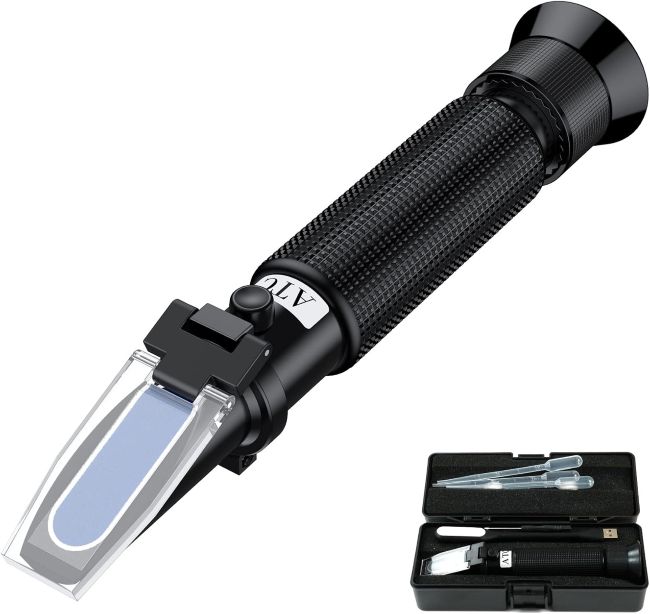
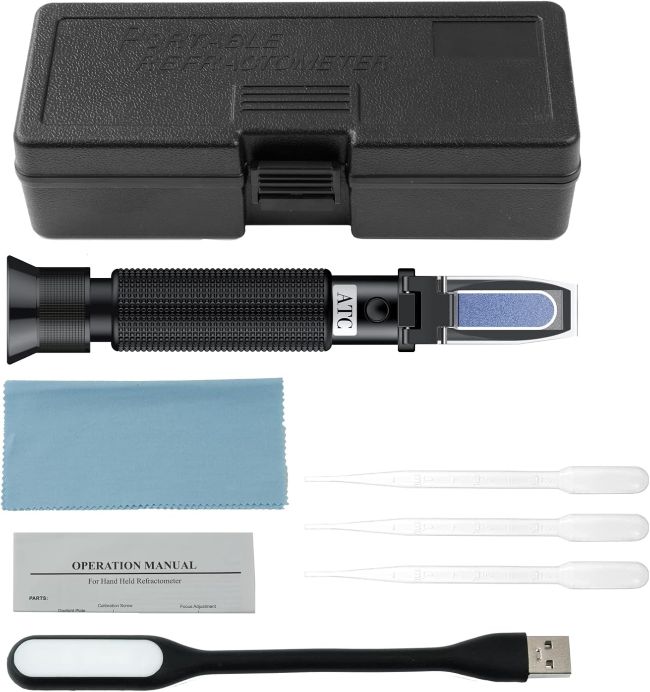
- The kit ships with a hard case, dropper, screwdriver, cleaning cloth, and a portable USB LED light.
Testing saltwater salinity with cheap test strips wastes time and money. Paper strips give vague color matches that leave you guessing at the real value. Digital meters read precise numbers but need frequent calibration and battery swaps. The TOOGOND salinity refractometer aims to simplify marine testing with one durable optical tool.
This handheld refractometer reads 0 to 100 PPT and 1.000 to 1.070 Specific Gravity for aquariums, pools, and tanks. Automatic temperature compensation works from 10 to 30 degrees Celsius without manual math. A hard case and a portable USB LED light add value most rival kits skip. Let’s see whether this refractometer earns a spot in your testing kit.
TOOGOND Salinity Refractometer
| Feature | Detail |
|---|---|
| Brand | TOOGOND |
| PPT Range | 0 to 100 |
| SG Range | 1.000 to 1.070 |
| Min Scale (SG) | 0.001 |
| Min Scale (PPT) | 1 |
| Scales | Specific Gravity (D 20/20) and PPT |
| Temperature Compensation | Automatic, 10 to 30 C (50 to 86 F) |
| Body Material | Aluminum and ABS rubber |
| Body Properties | Anti-rust, non-staining, abrasion-resistant |
| Power Source | Optical (no batteries) |
| Included Accessories | Hard case, dropper, screwdriver, user manual, cleaning cloth, USB LED light |
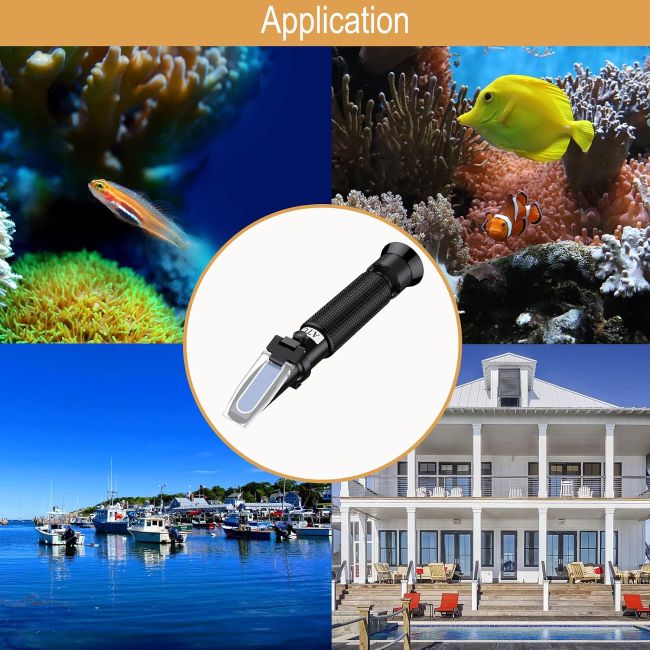
| Best Use | Saltwater pools, aquariums, marine monitoring, tanks |
Detailed Review
Why This Product Stands Out
Most salinity refractometer kits ship with the bare tool and a cheap cloth. The TOOGOND salinity refractometer takes a more complete approach. The box includes a hard case and a portable USB LED light for calibration and reading. That completeness matters because poor lighting blurs the scale line during indoor tests.
The refractometer also stands out through its fine scale resolution. The Specific Gravity scale reads in 0.001 steps across the 1.000 to 1.070 range. The PPT scale reads in 1 step across the 0 to 100 range. That resolution lets marine aquarists catch small tank shifts before they harm fish. You read one number, not two tests, which saves time during daily water checks.
Key Specifications
| Specification | Value |
|---|---|
| PPT Range | 0 to 100 |
| SG Range | 1.000 to 1.070 |
| Min Scale (SG) | 0.001 |
| Min Scale (PPT) | 1 |
| Scales | Specific Gravity (D 20/20), PPT |
| ATC Range | 10 to 30 C (50 to 86 F) |
| Body Material | Aluminum and ABS rubber |
| Body Properties | Anti-rust, non-staining, abrasion-resistant |
| Calibration Tool | Screwdriver (included) |
| Accessories | Hard case, dropper, cleaning cloth, USB LED light |
| Power Source | Optical (no batteries) |
Design & Build Quality
The TOOGOND refractometer follows a classic handheld optical tube design. The body fits one hand and the eyepiece sits at a natural viewing angle. That ergonomics matter because aquarists test water daily and need a tool that feels right. The tube shape lets you hold the device steady while you read the scale.
Build quality reflects the marine-use intent. The aluminum and ABS rubber body resists rust, stains, and wear in humid aquarium and pool rooms. That material choice matters because salt spray and wet hands corrode cheaper metal frames. The rubber coating adds grip for steady handling during a test. The hard case holds the refractometer and all accessories in fixed slots. Every detail serves the goal of a durable, daily-use marine testing tool.
Materials & Construction
Material choice drives the durability and accuracy of this refractometer. Aluminum forms the main body for corrosion resistance in wet, salty environments. ABS rubber coats the exterior for grip and impact protection during daily use. That combination beats bare metal frames that rust and plastic bodies that crack.
The calibration screw turns with the included screwdriver for precise zero-point adjustment. That construction method lets you recalibrate after travel or temperature shifts. The sample plate seals to prevent leaks during a test drop. The hard case uses foam cutouts to hold each piece in place during transport. The construction focuses on accuracy and longevity in wet, salty environments.
Performance
Refractometer performance shows up in reading speed, accuracy, and temperature handling. The optical scale reads 0 to 100 PPT and 1.000 to 1.070 SG for seawater and pools. The dual-scale eyepiece shows Specific Gravity and PPT in one clear view. You place a drop of water on the prism, hold the device to the light, and read the line.
Automatic temperature compensation works from 10 to 30 degrees Celsius. That range covers most room and pool temperatures without manual math. The portable USB LED light solves the poor-light problem that plagues indoor refractometer tests. You clip the light to the prism window for a bright, clear scale line. These features suit marine aquarists, pool owners, and saltwater tank monitoring.
Comfort / Usability
Usability separates a tool you use from one that sits in a drawer. The handheld tube design needs no power source or app to work. You lift the flap, drop a sample on the prism, and read the scale. That simplicity matters because daily testing becomes a habit when the tool stays easy.
The USB LED light adds comfort for indoor and nighttime tests. You no longer need to hunt for a window or lamp to read the scale. The dual-scale eyepiece shows both reading types without a conversion chart. Automatic temperature compensation removes the need for manual math. The hard case keeps the refractometer and accessories organized and ready for travel.
Features Explained
Every feature on the TOOGOND salinity refractometer serves a practical purpose. Here is why each one matters in daily use.
- 0 to 100 PPT range: Covers the full seawater and saltwater pool testing scale. You test any saltwater sample from brackish to full marine strength.
- 1.000 to 1.070 SG scale: Shows Specific Gravity for aquarists who track that unit. You get a second reading without running a separate test.
- 0.001 SG min scale: Lets you catch small tank shifts before they harm fish. You read fine changes that coarser scales blur together.
- Dual-scale eyepiece: Shows Specific Gravity and PPT in one view. You skip conversion charts and second tests for the same sample.
- ATC 10 to 30 C: Adjusts readings across most room and pool temperatures. You get accurate results without manual math or warm-up time.
- Aluminum body: Resists corrosion in humid, salty aquarium rooms. You get a tool that lasts through years of daily marine use.
- ABS rubber coating: Adds grip and impact protection for daily handling. You hold the device steady even with wet, slippery hands.
- Hard case with foam cutouts: Holds the refractometer and accessories in place. You transport the kit without loose parts rattling or breaking.
- Portable USB LED light: Illuminates the prism for clear indoor and nighttime reads. You no longer need a window or lamp to see the scale line.
- Screwdriver for calibration: Lets you set the zero point in seconds. You recalibrate after travel, temperature shifts, or long storage.
- Sample dropper: Transfers one drop of water to the prism. You avoid overfilling or spilling saltwater on the lens.
- Cleaning cloth: Wipes the prism between tests. You keep the optical surface clear for an accurate reading line.
Real World Usage
Picture a marine aquarium owner doing an evening water check. You pull the refractometer from the hard case and flip open the sample plate. A drop of tank water sits on the prism from the included dropper. The USB LED light clips to the prism window for a bright scale line. The dual scale shows Specific Gravity and PPT in one clear view without a lamp.
Now imagine a saltwater pool test on a covered patio at dusk. You drop a sample of pool water on the prism and read the scale. The LED light keeps the line clear even as the sun drops. Automatic temperature compensation handles the gap between the warm pool and the cooling air. The whole kit packs back in the hard case for the drive home.
Benefits
- A 0 to 100 PPT range covers full seawater, pools, and marine tank testing.
- A 1.000 to 1.070 SG scale tracks Specific Gravity without a second test.
- Fine 0.001 SG steps catch small tank shifts before they harm fish.
- Dual scales show both values in one clear eyepiece view.
- Automatic temperature compensation works across 10 to 30 degrees Celsius.
- An aluminum body resists corrosion in humid, salty environments.
- A portable USB LED light enables clear indoor and nighttime reads.
- A hard case with foam cutouts keeps all accessories safe for transport.
Limitations
- The ATC range tops out at 30 C, so hot pool water may exceed the limit.
- The 0 to 100 PPT range may exceed needs for low-salinity brackish tanks.
- The USB LED light needs a USB power source to run during a test.
- The optical scale still needs the LED light or good natural light to read.
- Calibration needs distilled water, which the kit does not include.
Who Should Buy It?
This refractometer suits marine aquarists who need a durable, daily salinity tester. Saltwater pool owners value the dual-scale eyepiece and the USB LED light for patio tests. Anyone who tests seawater in low-light settings will benefit from the included LED light. Tank keepers appreciate the fine 0.001 SG steps for tracking small salinity shifts.
If you want a complete, no-battery kit with a hard case and LED light, the TOOGOND fits. The automatic temperature compensation removes manual math from daily tests. The dual-scale view saves time over running two separate test methods. The hard case and accessories give you a complete kit right out of the box.
Who Should Avoid It?
Avoid this refractometer if you test water above 30 degrees Celsius. The ATC range tops out at 30 C, so hot pool samples may read off. Skip it if you want a digital meter with logging for record keeping. The optical scale reads a line, not a number you can store.
If you need a lightweight tool with no extra accessories, cheaper bare kits may fit. The hard case and LED light add value but also add bulk to the kit. Anyone who tests brackish water at very low salinity may find the range too wide.
Key Features Table
| Feature | Why It Matters |
|---|---|
| 0 to 100 PPT range | Covers full seawater, pool, and marine tank testing |
| 1.000 to 1.070 SG scale | Tracks Specific Gravity without a second test |
| 0.001 SG min scale | Catches small tank shifts before they harm fish |
| Dual-scale eyepiece | Shows SG and PPT in one view |
| ATC 10 to 30 C | Adjusts readings across most room and pool temps |
| Aluminum body | Resists corrosion in humid, salty environments |
| ABS rubber coating | Adds grip and impact protection |
| Hard case with foam cutouts | Keeps accessories safe for transport |
| Portable USB LED light | Enables clear indoor and nighttime reads |
| Screwdriver for calibration | Sets the zero point in seconds |
| No batteries needed | Works anywhere with natural or LED light |
Pros & Cons Table
| Pros | Cons |
|---|---|
| Dual scale shows SG and PPT | ATC tops out at 30 C |
| Fine 0.001 SG resolution | Range may exceed brackish tank needs |
| Aluminum body resists rust | USB LED light needs a power source |
| Hard case with foam cutouts | Distilled water not included |
| Portable USB LED light | No digital logging for records |
| No batteries for the refractometer | Optical scale still needs light to read |
Cleaning Tips
Wipe the prism with the included cleaning cloth after every test. Salt residue dries fast and blurs the next reading line. Rinse the sample plate with distilled water if you test a dirty or cloudy sample. Avoid tap water, since mineral spots can stain the prism over time. Let the prism air dry before you close the sample plate for storage.
Maintenance Tips
Store the refractometer in the hard case between uses to protect the prism. Keep the case in a dry, room-temperature spot away from direct sun. Calibrate the zero point with distilled water before each testing session. Use the screwdriver to adjust the calibration screw until the scale reads zero. Charge or replace the USB LED light power source before a low-light test session.
Troubleshooting Tips
Scale Line Looks Blurry
The eyepiece focus may not match your eyesight. Twist the eyepiece ring in or out until the scale sharpens. Clean the prism and eyepiece lens with the cloth if blur persists.
Reading Shifts Between Tests
Temperature swings can affect a sample even with compensation. Let the refractometer sit in the test area for a few minutes before you read. Test samples at room temperature for the most stable results.
Scale Reads Zero With Saltwater
The zero point may sit off after travel or long storage. Calibrate with distilled water and the screwdriver until the line hits zero. Re-test the saltwater sample after you finish the calibration step.
Water Leaks Off The Prism
The sample plate seal can wear or crack over time. Apply one drop, not a pool, to the center of the prism. Wipe any overflow with the cleaning cloth before you close the plate.
LED Light Shows No Scale Line
The USB LED light needs a working power source to illuminate the prism. Check the USB connection and try a different port or power bank. Aim the light at the prism window until the scale line brightens.
What Real Buyers Appreciate
Buyers often praise the dual-scale eyepiece for showing SG and PPT at once. Many appreciate the portable USB LED light for clear indoor and nighttime reads. Marine aquarists value the aluminum body for resisting salt corrosion over time. Several note the hard case keeps the kit organized for travel and storage. Beginners highlight the drop-and-read design for simple daily tank checks. Some wish the kit included distilled water, but most find the LED light a standout extra.
Frequently Asked Questions
What does the TOOGOND salinity refractometer measure?
The refractometer measures the salt content of water from 0 to 100 PPT. It also reads Specific Gravity from 1.000 to 1.070 on the same eyepiece. That range suits seawater, marine aquariums, saltwater pools, and tank monitoring.
How does the ATC function work on this refractometer?
The automatic temperature compensation works from 10 to 30 degrees Celsius. The feature adjusts the reading for the temperature of the sample and the air. You get accurate results without manual math or warm-up time.
Does the TOOGOND salinity refractometer need batteries?
The refractometer uses an optical scale and natural or LED light to read the sample. The included USB LED light needs a USB power source, but the refractometer itself needs no batteries.
What is the portable USB LED light for?
The LED light clips to the prism window to illuminate the scale line. You use it for indoor, evening, or low-light tests when natural light falls short. The light makes the reading line clear without a window or lamp.
How do I calibrate the refractometer?
Place a drop of distilled water on the prism and close the sample plate. Look through the eyepiece and use the screwdriver to turn the calibration screw. Adjust until the reading line sits at zero on the scale.
What accessories come with the refractometer?
The kit ships with a hard case, dropper, screwdriver, user manual, cleaning cloth, and a portable USB LED light. The hard case uses foam cutouts to hold each piece in place. You get a complete testing kit right out of the box.
Can I use this refractometer for saltwater pools?
The 0 to 100 PPT range covers saltwater pool and marine aquarium testing. Automatic temperature compensation handles pool water up to 30 degrees Celsius. Pool water above that temperature may exceed the ATC range.
Final Verdict
The TOOGOND salinity refractometer earns its place as a complete, durable marine testing kit. If you’re comparing other water-testing options, the guide to Best Affordable PAR, Moisture & Salinity Meters can help you explore additional tools for monitoring aquarium conditions. The 0 to 100 PPT and 1.000 to 1.070 SG ranges cover seawater and pool testing on dual scales. Fine 0.001 SG steps let you catch small tank shifts before they harm fish. Automatic temperature compensation works from 10 to 30 degrees Celsius. The aluminum body and hard case add durability for daily use. The portable USB LED light sets this kit apart for indoor and nighttime testing.
This tool does not target digital logging or hot-water testing above 30 C. It focuses on fast, daily salinity checks for marine aquarists and pool owners. For anyone who wants a no-battery, dual-scale refractometer with a hard case and LED light, the TOOGOND salinity refractometer belongs on your short list.
Call To Action
Ready to simplify your salinity testing with a complete, durable kit? The TOOGOND salinity refractometer brings a 0 to 100 PPT range, dual scales, fine 0.001 SG steps, a hard case, and a portable USB LED light to your marine kit. Drop a sample, read the line, and calibrate in seconds. Your best saltwater testing starts here.