How to Use API Saltwater Aquarium Test Kit
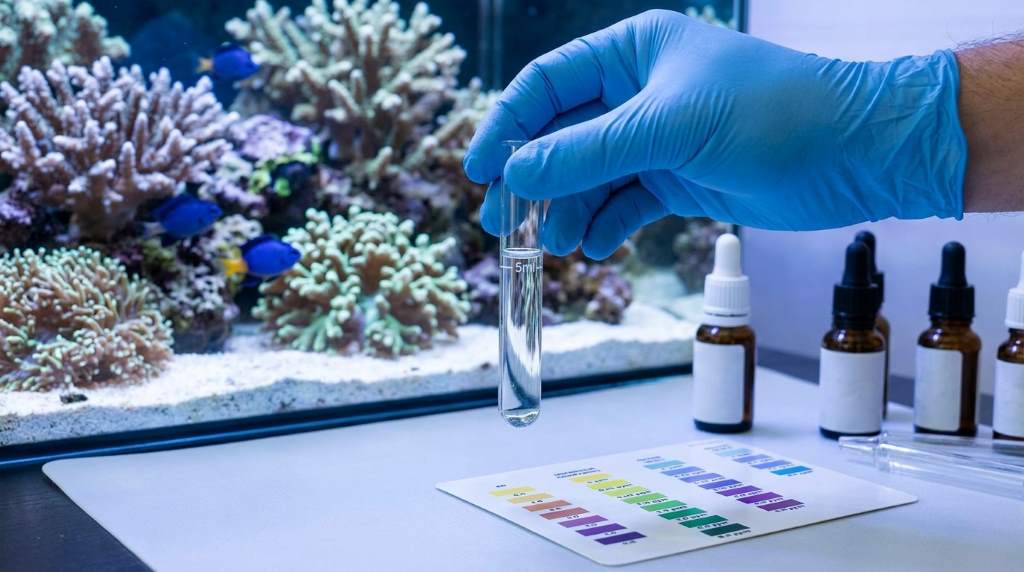
Use the API Saltwater Aquarium Test Kit by filling a clean tube with 5 ml of aquarium water. Then add each reagent exactly as directed, wait the required time, and compare colors under good lighting. The API Saltwater Aquarium Test Kit checks four important parameters: pH, ammonia, nitrite, and nitrate. It can perform more than 550 tests, making consistent monitoring practical for marine aquariums.
Key Takeaways
- Always use the saltwater color charts when testing marine aquarium water.
- Measure exactly 5 ml of aquarium water for each test.
- Hold reagent bottles vertically to produce consistent drops.
- Follow every shaking and waiting time precisely, especially for nitrate.
- Ammonia and nitrite should remain at zero in a stable aquarium.
- Use additional reef tests when keeping corals and sensitive invertebrates.
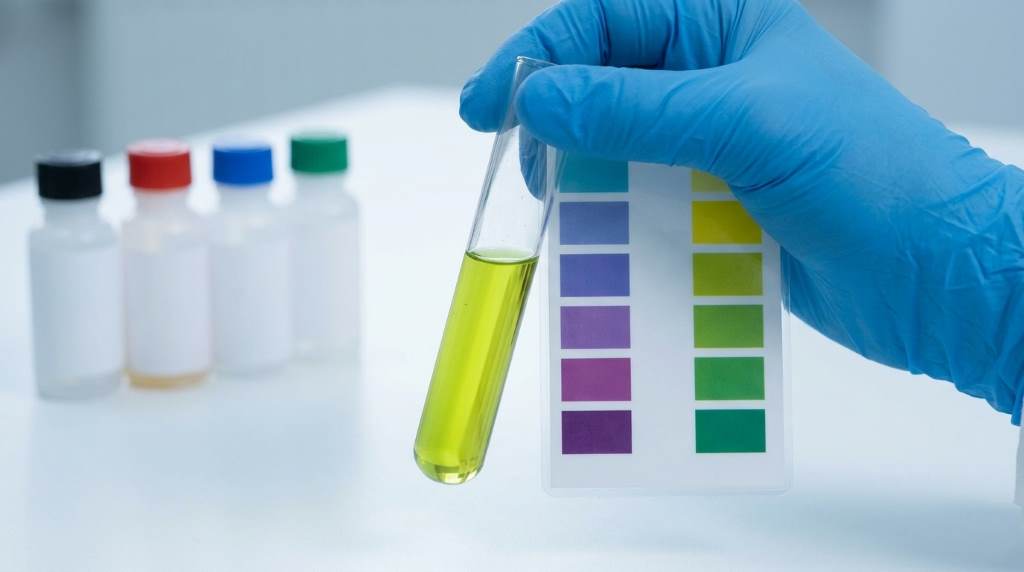
What the API Saltwater Test Kit Measures
The kit measures high-range pH, ammonia, nitrite, and nitrate. Together, these parameters reveal important changes in your aquarium’s biological and chemical stability.
However, these four tests do not describe every aspect of marine water chemistry. Reef aquariums also require monitoring of calcium, alkalinity, phosphate, salinity, and other important parameters.
Therefore, treat this kit as a core water-quality tool rather than a complete reef-testing system. That distinction prevents many beginners from relying on incomplete information.
Why Each Parameter Matters
| Parameter | What It Shows | Practical Goal |
|---|---|---|
| High-range pH | Water acidity and alkalinity | Keep marine pH stable around the appropriate range |
| Ammonia | Toxic nitrogen waste | 0 ppm in an established aquarium |
| Nitrite | Intermediate nitrogen waste | 0 ppm in an established aquarium |
| Nitrate | Accumulated nitrogen waste | Keep levels controlled for livestock needs |
Prepare Before You Test Aquarium Water
Accurate testing begins before you open any reagent bottle. Clean equipment, correct sampling, and consistent timing can prevent misleading readings.
First, gather the test tubes, color charts, reagent bottles, and holding tray. Keep the kit away from children, food, direct sunlight, and unnecessary heat.
Next, inspect every bottle before testing. Replace products with damaged containers, unclear labels, or questionable reagent condition.
Clean the Test Tube Correctly
Rinse the test tube thoroughly before collecting your sample. Residue from previous tests can influence the next color reaction.
After testing, rinse the tube promptly with clean water. Avoid leaving reagent residue inside the tube because deposits can build up over time.
Collect a Representative Water Sample
Take the sample from aquarium water rather than stagnant water inside equipment chambers. Avoid collecting only surface film or debris-heavy water.
Then fill the tube precisely to the 5 ml mark. Accurate volume matters because reagent concentration depends on the sample volume.
How to Perform the API Saltwater Tests
Each test follows a similar pattern, but the reagent amounts and timing differ. Never assume one test uses the same procedure as another.
Step 1: Test High-Range pH
Rinse a clean test tube with the aquarium water being tested. Then fill the tube to the 5 ml line.
Add five drops of the high-range pH solution. Hold the bottle completely vertical while dispensing every drop.
Next, cap the tube and invert it several times. Do not cover the tube opening with your finger during mixing.
Finally, compare the developed color with the saltwater high-range pH chart. Use bright, neutral lighting and compare against the chart’s white background.
Marine aquariums commonly operate around pH 8.2 to 8.4. More importantly, avoid chasing small daily changes with sudden chemical adjustments.
Step 2: Test Ammonia
Fill a clean test tube with 5 ml of aquarium water. Add eight drops from ammonia solution bottle number one.
Then add eight drops from ammonia solution bottle number two. Keep both bottles vertical while counting the drops.
Cap the tube and shake it vigorously for five seconds. Next, wait five minutes for the color to develop.
Compare the sample against the saltwater ammonia color chart. Read the closest color match rather than guessing between widely separated shades.
Established aquariums should show zero ammonia. Any detectable ammonia deserves attention, especially when fish show stress or unusual behavior.
Step 3: Test Nitrite
Fill another clean tube with 5 ml of aquarium water. Add five drops of the nitrite test solution.
Cap the tube and shake it for five seconds. Then allow five minutes for the color to develop.
Compare the result with the saltwater nitrite color chart. Use the same lighting conditions each time for better consistency.
Nitrite should remain at zero in a stable established aquarium. A detectable reading can indicate biological filtration problems or an incomplete nitrogen cycle.
Step 4: Test Nitrate
Nitrate requires more attention because its procedure includes an important reagent preparation step. First, fill a clean tube with 5 ml of aquarium water.
Add ten drops from nitrate solution bottle number one. Cap the tube and invert it several times.
Next, shake nitrate solution bottle number two vigorously for at least 30 seconds. This step directly affects the reliability of the final color reaction.
Add ten drops from bottle number two while holding it vertically. Cap the tube and shake it vigorously for one full minute.
Then wait five minutes for the color to develop. Compare the sample with the saltwater nitrate color chart under consistent lighting.
Do not rush the nitrate procedure. Skipping the bottle-shaking step can produce a result that does not represent your actual water condition.
How to Read API Saltwater Test Results
Color matching works best when you control the viewing conditions. Always compare the tube against the white portion of the appropriate color chart.
Read results under bright, neutral lighting whenever possible. Avoid colored aquarium lighting because blue or purple illumination can distort your perception.
Also, read the result within the specified development period. Waiting substantially longer can make color comparison less reliable.
Understand the Numbers Instead of Chasing Colors
Ammonia and nitrite deserve immediate attention when they appear in an established aquarium. Nitrate requires more context because acceptable levels depend on livestock and aquarium design.
Meanwhile, pH should be evaluated for stability rather than treated as a number that requires constant correction. Sudden pH manipulation can create more stress than a modest stable deviation.
Most importantly, compare today’s reading with previous readings. A trend often tells you more than one isolated measurement.
Best Testing Routine for a Saltwater Aquarium
API recommends regular testing, including weekly testing for established aquarium maintenance. New tanks may require more frequent testing while the biological filter develops.
During cycling, test ammonia and nitrite closely as bacterial populations establish. Nitrate also helps confirm that nitrogen conversion is progressing.
After cycling, establish a consistent weekly testing routine. Increase testing whenever you add livestock, change filtration, notice symptoms, or suspect water-quality problems.
Keep a Simple Water-Testing Log
Record the date, time, pH, ammonia, nitrite, and nitrate after every test. Also note water changes, livestock additions, feeding changes, and unusual aquarium events.
This simple habit creates a useful baseline for your aquarium. Consequently, gradual changes become easier to recognize before they become serious problems.
- Date: Record the testing date and approximate time.
- pH: Record the closest chart value.
- Ammonia: Record the measured ppm.
- Nitrite: Record the measured ppm.
- Nitrate: Record the measured ppm.
- Notes: Record maintenance, livestock changes, and unusual observations.
Common API Testing Mistakes to Avoid
Many inaccurate results come from small procedural mistakes rather than defective test kits. Fortunately, most errors remain easy to prevent.
Using the Wrong Color Chart
The kit contains saltwater-specific charts for the marine tests. Always confirm that you are reading the saltwater chart.
Using an incorrect chart can lead you toward the wrong interpretation. This mistake becomes especially confusing when colors appear close together.
Counting Drops Incorrectly
Hold each reagent bottle vertically when dispensing drops. Tilting the bottle can change drop size and affect the reagent-to-water ratio.
Count every drop carefully rather than estimating. If you lose count, restart the test with a fresh water sample.
Skipping the Nitrate Bottle Shake
Nitrate solution number two requires vigorous shaking before use. Therefore, never treat that instruction as optional.
Also, shake the completed nitrate sample for the full one minute. Rushing either step can compromise the color reaction.
Using Dirty Tubes
Old reagent residue can remain inside a tube after previous testing. Always rinse the tube thoroughly before starting another test.
Likewise, rinse the tube promptly after finishing. This routine protects the tube and reduces cross-test contamination.
Adding Reagents Directly Into the Aquarium
Never add test reagents directly into aquarium water. Perform every reaction inside the designated test tube.
Keep the reagent bottles closed whenever you are not dispensing drops. Follow the product safety instructions for handling and storage.
What to Do When Results Look Abnormal
An unexpected result deserves verification before you make major changes. First, repeat the test using a clean tube and fresh sample.
Check your drop count, reagent order, shaking time, waiting period, and color chart. If the second result confirms the problem, investigate the aquarium systematically.
If Ammonia or Nitrite Appears
Check recent livestock additions, feeding levels, filtration performance, and possible organic decay. Avoid adding more livestock until the biological system stabilizes.
Water changes can help reduce harmful compounds when aquarium conditions require intervention. Match replacement water temperature and chemistry carefully to reduce additional stress.
During a new aquarium cycle, avoid interpreting every temporary increase as a failed system. Instead, track the progression of ammonia, nitrite, and nitrate over time.
If Nitrate Keeps Rising
Persistent nitrate increases usually indicate ongoing nitrogen production exceeding your export capacity. Review feeding, stocking, maintenance, filtration, and water-change practices.
Also test replacement water when nitrate remains unexpectedly high. Source water can contribute unwanted nitrate and complicate your maintenance strategy.
If pH Changes Suddenly
First, retest the water before adding a pH-adjusting product. Sudden readings may result from testing errors or changing aquarium conditions.
Then consider alkalinity, aeration, biological activity, and recent maintenance. Stable marine chemistry generally matters more than rapid attempts to force one reading.
Is the API Saltwater Master Kit Enough for Reef Tanks?
The kit provides useful core measurements for reef aquariums. However, it does not measure every parameter required for advanced coral keeping.
For example, reef aquarists commonly monitor calcium, alkalinity, and phosphate alongside nitrate. Salinity also requires a separate instrument or testing method.
Therefore, use the saltwater kit as a foundation rather than your entire reef-testing program. Choose additional tests according to your livestock and aquarium goals.
How to Get More Reliable Results Every Time
Consistency provides the biggest improvement in home aquarium testing. Use the same sampling location, lighting conditions, timing habits, and recording method whenever practical.
Additionally, keep your reagents organized so you never confuse bottles between tests. Store the kit according to the manufacturer’s instructions and monitor reagent condition.
When a reading looks surprising, repeat the test instead of immediately treating the aquarium. Good aquarium care combines measured data with observation and careful reasoning.
Frequently Asked Questions
How much aquarium water goes into an API saltwater test tube?
Fill the test tube to the 5 ml line for the API Saltwater Master Test Kit tests.
How often should I use the API saltwater test kit?
Test established aquariums weekly and test more frequently during cycling or suspected water-quality problems.
What should ammonia read in a saltwater aquarium?
An established saltwater aquarium should show zero ammonia on the test.
What should nitrite read in a saltwater aquarium?
An established aquarium should show zero nitrite because detectable levels indicate a potential biological imbalance.
Can I use this API kit for a reef aquarium?
Yes, but reef aquariums need additional testing for parameters such as calcium, alkalinity, and phosphate.
Final Thoughts
Using the API Saltwater Master Test Kit correctly depends on precision, consistency, and careful interpretation. Measure 5 ml accurately, count every drop, follow timing instructions, and use the saltwater charts.
Most importantly, record your results and watch trends instead of reacting to isolated numbers. Start a weekly testing routine today, then expand your testing program as your aquarium becomes more demanding.